New Jersey, USA


Introduction
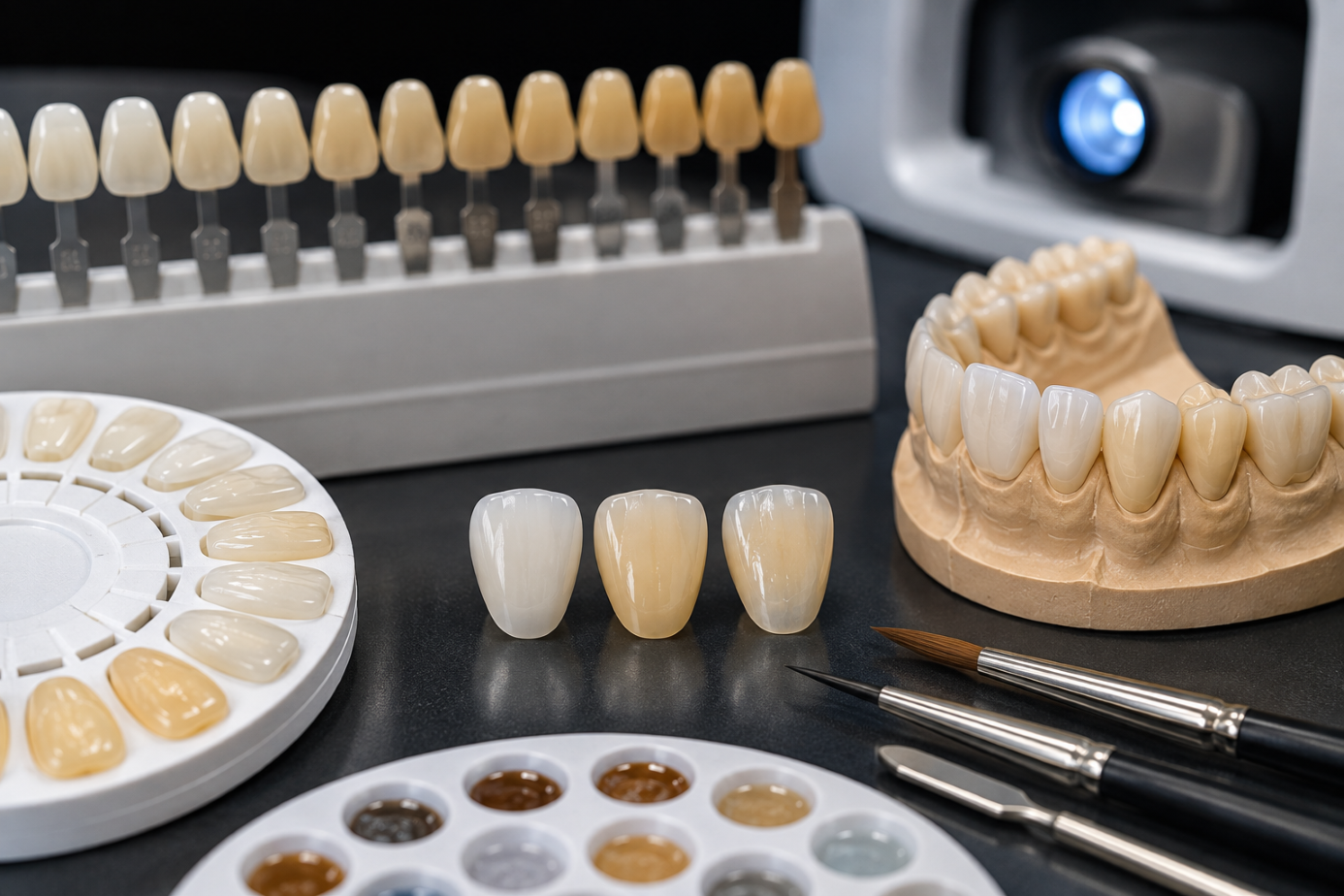
Achieving a natural-looking dental restoration requires more than selecting a strong and durable material. Shade selection, translucency, surface texture, and color characterization all play an important role in creating restorations that blend seamlessly with natural teeth. This is particularly important when working with zirconia, one of the most widely used materials in modern restorative dentistry.
Understanding zirconia crown shades is essential for dental technicians and clinicians who want to achieve predictable aesthetic results. With modern multilayer zirconia and advanced digital workflows, laboratories can reproduce natural tooth characteristics with greater precision than ever before.
This guide explores zirconia crown shades, shade selection techniques, aesthetic matching, and the role of communication between dentists and dental laboratories.
Why Shade Matching Matters for Zirconia Crowns
A crown can have an excellent fit and functional design but still look unnatural if its shade does not match the surrounding teeth.
Aesthetic matching involves evaluating:
- Hue
- Chroma
- Value
- Translucency
- Opalescence
- Surface texture
- Characterization
Natural teeth are rarely a single uniform color. Their appearance changes from the cervical area toward the incisal edge, with variations in translucency and internal coloration.
For this reason, selecting the correct zirconia crown shades requires more than simply choosing the closest shade tab.
Understanding Tooth Color
Before selecting a zirconia shade, it is useful to understand the basic components of tooth color.
Hue
Hue describes the basic color family of the tooth, such as yellowish, reddish, or neutral tones.
Chroma
Chroma refers to the intensity or saturation of the color.
Value
Value represents how light or dark the tooth appears. It is particularly important because an incorrect value can make a restoration immediately noticeable.
Translucency
Translucency determines how much light passes through the restoration. Modern zirconia materials are available with different levels of translucency depending on the clinical application.
Types of Zirconia and Their Aesthetic Properties
Not all zirconia materials have the same optical characteristics.
Monolithic Zirconia
Monolithic zirconia is milled from a single zirconia block and is known for its strength.
It is commonly used for:
- Posterior crowns
- Bridges
- Implant restorations
- Full-arch prostheses
High-Translucency Zirconia
High-translucency zirconia provides improved light transmission and can be useful for highly aesthetic anterior restorations.
Multilayer Zirconia
Multilayer zirconia contains gradual transitions in shade and translucency within the same disc or block. This allows technicians to reproduce the natural progression of color from the cervical region toward the incisal edge.
Selecting the Right Zirconia Crown Shade
Shade selection should ideally be performed before tooth preparation or before the teeth become dehydrated.
Important considerations include:
- Natural tooth color
- Adjacent restorations
- Skin and lip tones
- Lighting conditions
- Preparation shade
- Cement or bonding material
- Desired translucency
The surrounding teeth should always be considered when selecting zirconia crown shades, particularly for anterior restorations.
The Importance of Lighting
Lighting can significantly influence perceived tooth color.
Shade matching should ideally be performed under controlled, neutral lighting rather than relying solely on strong dental operating lights.
Different light sources can create different color perceptions, making a restoration appear:
- More yellow
- More grey
- Brighter
- Darker
- More translucent
Consistent lighting conditions improve the reliability of shade communication between the clinic and laboratory.
Digital Shade Matching
Digital technology is becoming increasingly valuable in modern aesthetic dentistry.
Digital shade analysis systems can help evaluate:
- Tooth color
- Value
- Chroma
- Shade distribution
- Surface characteristics
High-quality clinical photographs can also provide dental technicians with additional information that cannot always be communicated through a conventional shade tab.
Digital workflows make aesthetic communication more predictable and efficient.
The Role of Photography
Photography is one of the most useful tools for communicating aesthetic information to a dental laboratory.
Useful photographs may include:
- Full-face image
- Smile photograph
- Retracted anterior view
- Close-up of the teeth
- Shade tab next to the natural tooth
Photographs should be taken under consistent lighting and with accurate white balance whenever possible.
This gives technicians a more complete understanding of the patient’s natural tooth characteristics.
Custom Characterization
Even when the base shade is correct, natural teeth often contain subtle variations.
Dental technicians can reproduce these details through characterization techniques such as:
- Internal staining
- Surface staining
- Incisal effects
- Mamelon characterization
- Enamel-like translucency
- Surface texture
These details help prevent a restoration from appearing too uniform or artificial.
Managing Different Clinical Situations
Shade selection can become more challenging when patients have:
- Multiple existing restorations
- Discolored adjacent teeth
- Veneers
- Metal-ceramic crowns
- Severely stained preparations
- Dark implant abutments
In these situations, the technician may need additional information about the preparation, underlying structure, and desired final appearance.
Communication between the dentist and laboratory is especially important for complex cases.
Zirconia Crown Shades and Multilayer Materials
Multilayer zirconia has simplified the process of creating natural color transitions.
Instead of using a single uniform shade, multilayer materials can provide gradual changes in:
- Color intensity
- Value
- Translucency
- Incisal appearance
This can reduce the amount of manual characterization required while still producing highly aesthetic restorations.
However, the technician must position the restoration correctly within the zirconia disc to achieve the intended shade distribution.
The Importance of Laboratory Expertise
Advanced zirconia materials and digital equipment are valuable, but they cannot replace technician experience.
An experienced technician understands how to evaluate:
- Digital scans
- Clinical photographs
- Shade information
- Preparation color
- Material selection
- Surface characteristics
The final result depends on combining technology with technical and artistic expertise.
Common Shade Matching Mistakes
Several factors can lead to an inaccurate aesthetic result.
Common mistakes include:
- Taking the shade after tooth dehydration
- Using inconsistent lighting
- Relying exclusively on a shade tab
- Ignoring translucency
- Failing to photograph the case
- Selecting the wrong zirconia type
- Providing insufficient information to the laboratory
A systematic shade-matching protocol can significantly reduce these problems.
How Dentists and Laboratories Can Improve Communication
Successful aesthetic restorations require collaboration.
Dentists can help technicians by providing:
- Accurate shade information
- High-quality photographs
- Digital scans
- Preparation shade details
- Patient expectations
- Reference teeth
- Notes about desired translucency
Technicians can then use this information to select appropriate materials and determine the most suitable fabrication and characterization approach.
The Future of Zirconia Aesthetics
Digital dentistry continues to improve zirconia aesthetics through:
- AI-assisted shade analysis
- Advanced digital photography
- Improved multilayer zirconia
- More sophisticated CAD software
- Digital smile design
- Automated color analysis
These developments are making aesthetic matching increasingly predictable.
As zirconia materials become more sophisticated, dental laboratories will have greater control over both the functional and optical properties of restorations.
Conclusion
Achieving a natural-looking zirconia restoration requires careful attention to shade, value, chroma, translucency, and surface characterization. Zirconia crown shades should be selected as part of a comprehensive aesthetic assessment rather than as an isolated shade-tab decision.
With high-quality photography, digital workflows, advanced multilayer materials, and experienced technicians, laboratories can create restorations that closely replicate the appearance of natural teeth. Effective communication between the dentist and laboratory remains one of the most important factors in achieving consistent aesthetic results.
By combining modern materials with expert shade selection and characterization, zirconia crown shades can be accurately reproduced to create durable, functional, and highly natural-looking restorations.