Dental Clinic, Digital Dentistry, General

How Artificial Intelligence Is Changing Dentistry

Introduction

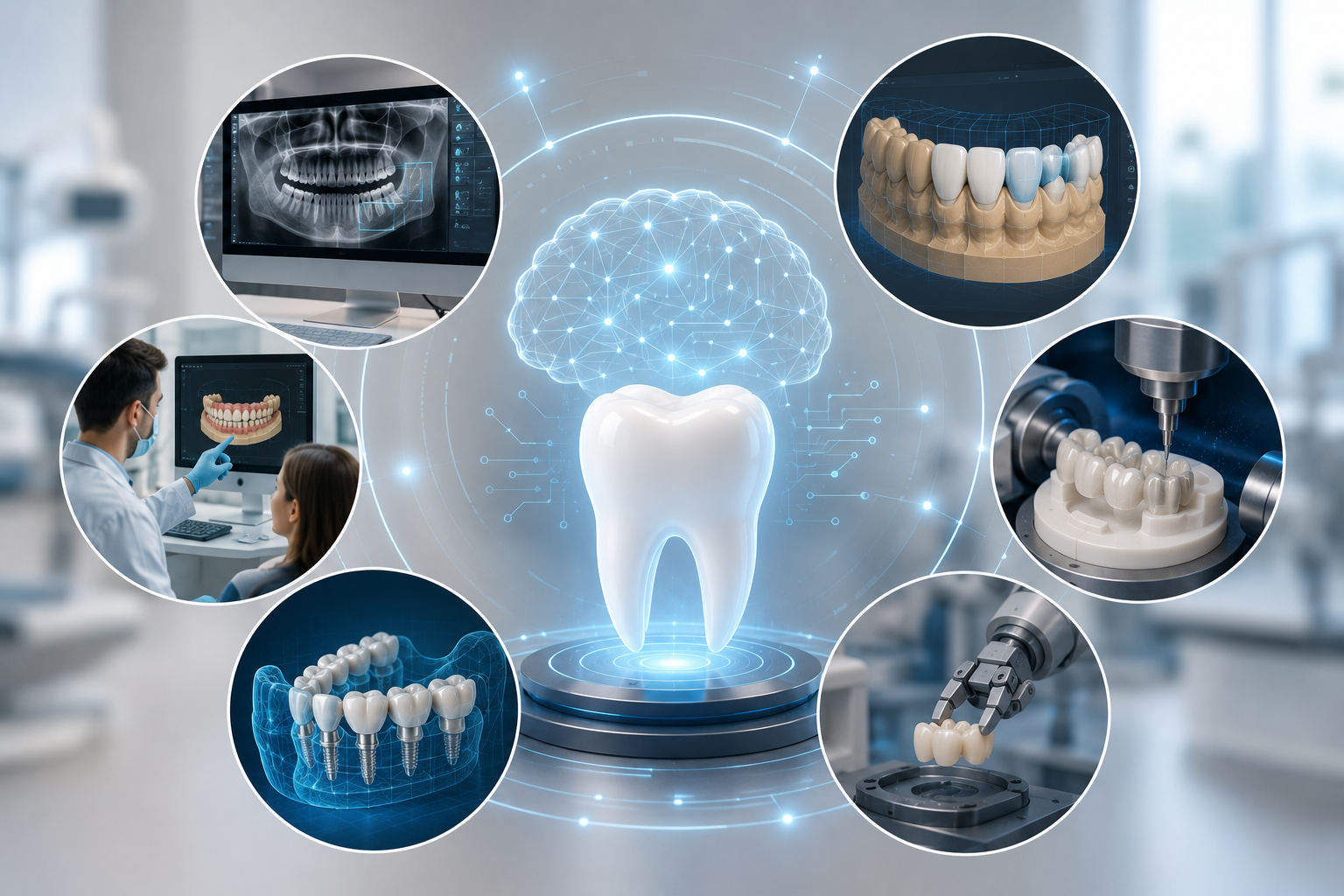
Artificial intelligence (AI) is rapidly transforming healthcare, and dentistry is no exception. From improving diagnostics to streamlining laboratory workflows, AI is helping dental professionals make more accurate decisions while increasing efficiency. As digital technologies continue to evolve, AI is becoming an essential tool for both dental clinics and laboratories.

Today, artificial intelligence supports clinicians in diagnosing conditions, planning treatments, designing restorations, and enhancing communication with dental laboratories. By combining advanced algorithms with digital dentistry, artificial intelligence is improving patient care and making restorative procedures more predictable.

This article explores how artificial intelligence is changing modern dentistry and what it means for the future of dental care.

What Is Artificial Intelligence in Dentistry?

Artificial intelligence refers to computer systems that can analyze data, recognize patterns, and assist in decision-making.

In dentistry, AI is used alongside digital technologies such as:

  • Intraoral scanners
  • CBCT imaging
  • CAD/CAM software
  • Digital smile design
  • 3D printing

Rather than replacing dental professionals, AI provides valuable support by improving accuracy and reducing manual tasks.


Improving Diagnosis

One of the most important applications of AI is assisting with diagnosis.

AI-powered software can analyze digital images to help identify:

  • Dental caries
  • Bone loss
  • Periapical lesions
  • Impacted teeth
  • Implant positioning
  • Periodontal disease

These tools help clinicians detect potential problems earlier and support more informed treatment decisions.


Better Treatment Planning

Successful treatment begins with careful planning, and AI is making this process faster and more accurate.

AI assists clinicians by:

  • Analyzing patient records
  • Evaluating CBCT scans
  • Suggesting implant positions
  • Supporting orthodontic planning
  • Predicting restorative outcomes

These capabilities improve treatment predictability while reducing planning time.


Transforming Dental Laboratories

Artificial intelligence is also changing the way dental laboratories design and manufacture restorations.

AI supports laboratory workflows by:

  • Optimizing CAD designs
  • Improving restoration anatomy
  • Automating repetitive tasks
  • Enhancing quality control
  • Reducing production errors

Combined with CAD/CAM systems, AI helps technicians produce highly accurate restorations more efficiently.


Improving CAD/CAM Workflows

Modern CAD/CAM software increasingly incorporates AI-assisted features.

These include:

  • Automatic margin detection
  • Tooth anatomy suggestions
  • Occlusal analysis
  • Contact point optimization
  • Restoration design recommendations

AI reduces design time while maintaining consistent quality.


Supporting Implant Dentistry

Implant treatment requires precise planning, and AI is becoming an important tool throughout the workflow.

Applications include:

  • Bone density analysis
  • Implant positioning
  • Surgical guide planning
  • Prosthetic design
  • Risk assessment

By analyzing large amounts of clinical data, AI helps clinicians make more confident decisions.


Enhancing Patient Communication

AI-powered visualization tools help patients better understand their treatment options.

Digital simulations can demonstrate:

  • Smile improvements
  • Implant restorations
  • Orthodontic outcomes
  • Cosmetic treatments

When patients clearly understand the expected results, they often feel more confident about proceeding with treatment.


Increasing Efficiency

Artificial intelligence helps dental practices save time by automating many routine tasks.

Examples include:

  • Appointment scheduling
  • Clinical documentation
  • Image analysis
  • Workflow management
  • Laboratory communication

This allows clinicians to spend more time focusing on patient care.


Benefits for Dental Professionals

The integration of AI offers many advantages, including:

  • Improved diagnostic accuracy
  • Faster treatment planning
  • Better communication
  • More predictable restorations
  • Reduced manual workload
  • Increased productivity
  • Enhanced patient experience

These benefits support both clinical excellence and operational efficiency.


Challenges and Considerations

Although AI offers many advantages, it should always be used as a support tool rather than a replacement for professional expertise.

Dental professionals must continue to rely on:

  • Clinical judgment
  • Patient examination
  • Experience
  • Ethical decision-making

Successful dentistry combines advanced technology with human knowledge and skill.


The Future of AI in Dentistry

Artificial intelligence is expected to play an even greater role in the coming years.

Future developments may include:

  • More advanced diagnostic systems
  • Personalized treatment recommendations
  • Fully integrated digital workflows
  • Improved robotic assistance
  • Smarter CAD/CAM design software
  • Enhanced laboratory automation

As technology evolves, AI will continue to improve both clinical and laboratory processes.


Conclusion

Artificial intelligence is reshaping modern dentistry by improving diagnosis, treatment planning, digital workflows, and restorative design. Rather than replacing clinicians and dental technicians, AI enhances their ability to deliver accurate, efficient, and high-quality care.

As digital dentistry continues to advance, artificial intelligence will become an even more valuable tool for dental practices and laboratories. By combining human expertise with intelligent technology, the future of dentistry promises greater precision, improved patient experiences, and more predictable long-term outcomes.

Start Your Case Planning