Case Planning, Dental Clinic, General, Implants

Case Planning Considerations for Immediate Loading Implants

Introduction

Immediate loading implants have become an increasingly popular treatment option in modern implant dentistry. Unlike traditional implant protocols that require several months of healing before placing the final restoration, immediate loading allows a provisional restoration to be attached shortly after implant placement. This approach offers faster aesthetic and functional results, improving the overall patient experience.

However, the success of immediate loading depends on careful case planning. Every clinical detail—from patient selection and bone quality to implant stability and prosthetic design—must be thoroughly evaluated before treatment begins. Effective case planning reduces risks, improves treatment predictability, and supports long-term implant success.

This article explores the essential case planning considerations for immediate loading implants and explains how clinicians and dental laboratories can work together to achieve optimal outcomes.

What Are Immediate Loading Implants?

Immediate loading implants involve placing a temporary restoration on a dental implant within 48 hours of implant surgery, rather than waiting for complete osseointegration.

Common applications include:

  • Single-tooth implants
  • Multiple implant restorations
  • Full-arch implant prostheses
  • All-on-4® and All-on-6® treatments

Immediate loading provides patients with improved aesthetics and function while the implants heal.


Why Case Planning Is Essential

Not every patient is a suitable candidate for immediate loading. Careful evaluation is necessary to determine whether predictable results can be achieved.

Proper case planning helps clinicians:

  • Select appropriate candidates
  • Evaluate bone quality
  • Determine implant positioning
  • Plan prosthetic design
  • Reduce mechanical complications
  • Improve long-term stability

Without comprehensive planning, immediate loading may increase the risk of implant failure or prosthetic complications.


Patient Selection

Successful immediate loading begins with selecting the right patient.

Important factors include:

General Health

Patients should have good overall health with no uncontrolled systemic conditions that may interfere with healing.

Oral Health

Clinicians evaluate:

  • Periodontal condition
  • Soft tissue health
  • Existing infections
  • Oral hygiene habits

Patient Compliance

Patients must be willing to follow postoperative instructions and attend scheduled follow-up appointments.

Proper patient selection significantly improves treatment success.


Bone Quality and Bone Volume

Bone quality is one of the most important factors in immediate loading protocols.

Clinicians assess:

  • Bone density
  • Bone volume
  • Ridge anatomy
  • Cortical bone thickness
  • Implant site condition

Cone Beam Computed Tomography (CBCT) provides detailed three-dimensional images that help determine whether sufficient bone is available for immediate loading.

Patients with adequate bone quality generally achieve more predictable outcomes.


Achieving Primary Implant Stability

Primary stability is essential for successful immediate loading.

High implant stability minimizes micromovement during the healing period and promotes successful osseointegration.

Factors influencing stability include:

  • Implant design
  • Bone density
  • Implant length
  • Implant diameter
  • Surgical technique

Many clinicians measure insertion torque and implant stability quotient (ISQ) values before deciding to proceed with immediate loading.


Prosthetically Driven Implant Placement

Implant placement should always be guided by the design of the final restoration.

Prosthetically driven planning considers:

  • Implant angulation
  • Emergence profile
  • Occlusion
  • Aesthetic requirements
  • Future restoration contours

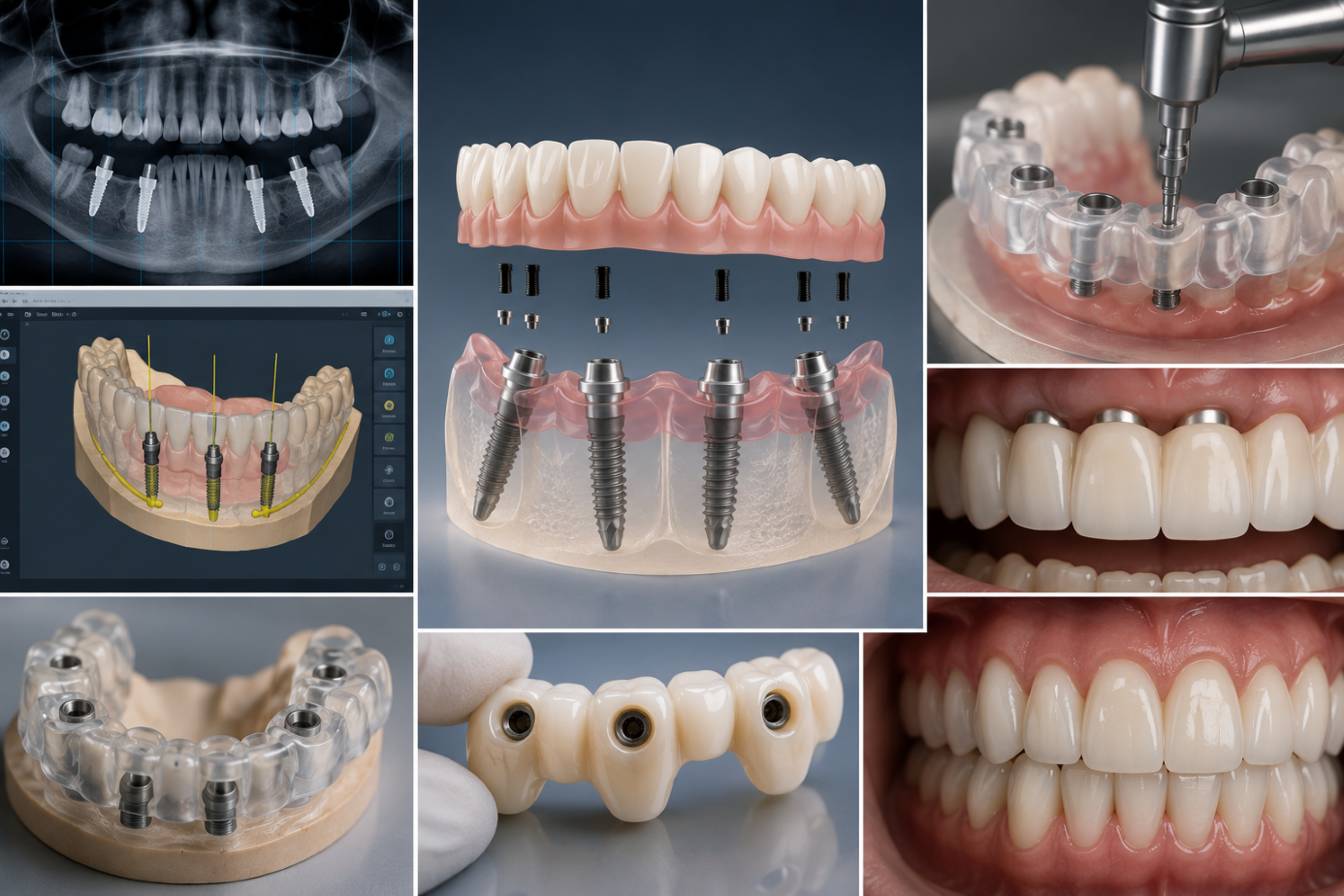
Digital planning software allows clinicians to position implants accurately while optimizing both function and appearance.


Digital Case Planning

Modern digital technology has transformed implant planning.

Common digital tools include:

  • CBCT imaging
  • Intraoral scanners
  • CAD/CAM software
  • Digital smile design
  • Surgical guide planning

Digital workflows improve communication between clinicians and dental laboratories while increasing treatment accuracy.

Computer-guided surgery also helps minimize surgical deviations.


Prosthetic Design Considerations

The temporary restoration should protect the healing implant while maintaining aesthetics and function.

Important design principles include:

Passive Fit

The provisional restoration should fit accurately without placing excessive stress on the implant.

Occlusal Management

Occlusal contacts should be carefully adjusted to reduce excessive loading during healing.

Material Selection

Lightweight provisional materials are commonly preferred during the healing phase.

The final prosthesis is typically fabricated after complete osseointegration.


The Role of the Dental Laboratory

Dental laboratories play a critical role in immediate loading cases.

Laboratory technicians assist with:

  • Digital restoration design
  • Surgical guide fabrication
  • Temporary prosthesis production
  • Final prosthetic manufacturing
  • Occlusal verification

Close communication between clinicians and laboratory teams improves restorative accuracy and treatment efficiency.

A collaborative workflow supports predictable clinical outcomes.


Preventing Common Complications

Careful planning helps reduce the risk of complications such as:

  • Implant micromovement
  • Implant failure
  • Occlusal overload
  • Screw loosening
  • Poor aesthetic outcomes
  • Prosthetic fractures

Most complications can be minimized through accurate diagnostics, proper implant positioning, and well-designed provisional restorations.


Long-Term Follow-Up

Immediate loading requires careful monitoring throughout the healing period.

Follow-up appointments should include:

  • Clinical examinations
  • Implant stability assessment
  • Occlusal evaluation
  • Soft tissue monitoring
  • Radiographic review

Long-term maintenance supports implant health and helps ensure restoration longevity.


Future Trends in Immediate Loading

Advancements in digital dentistry continue to improve immediate loading protocols.

Emerging technologies include:

  • Artificial intelligence-assisted treatment planning
  • Advanced implant surface technologies
  • Improved CAD/CAM restorations
  • Enhanced digital surgical guides
  • Automated occlusal analysis

These innovations are making immediate loading more predictable and accessible for a wider range of patients.


Conclusion

Immediate loading implants offer significant advantages, including faster treatment, immediate aesthetics, and improved patient satisfaction. However, their long-term success depends on careful preparation and collaboration.

By prioritizing case planning, clinicians can select suitable patients, optimize implant positioning, improve prosthetic design, and reduce the risk of complications. Through digital workflows and close cooperation with dental laboratories, effective case planning provides the foundation for successful immediate loading implant restorations and long-lasting clinical outcomes.

Start Your Case Planning