New Jersey, USA


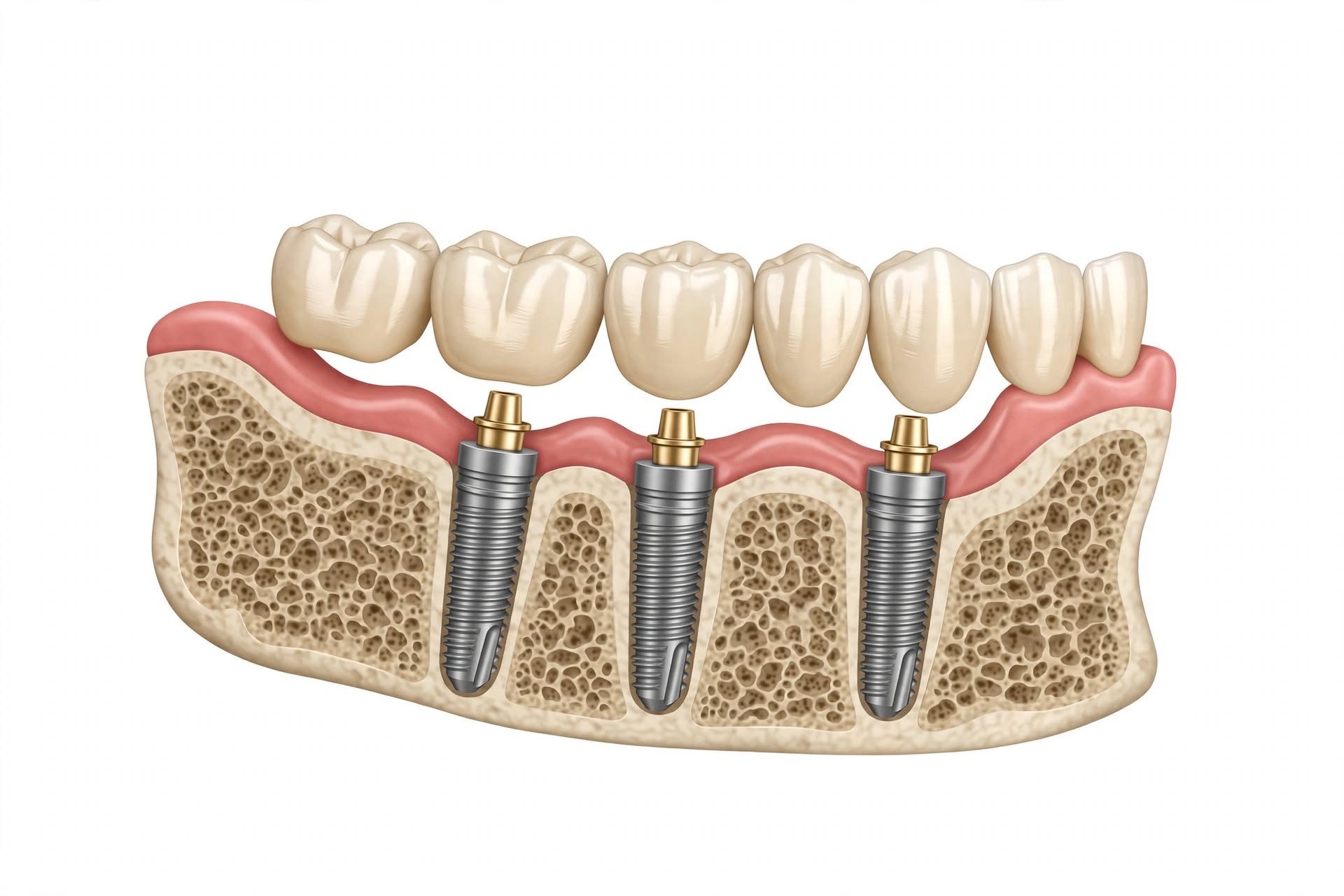
Implant-supported restorations require a high level of precision at every stage, from digital planning and implant positioning to laboratory fabrication and final delivery. One of the most important factors in achieving a predictable restoration is passive fit.
A restoration with a passive fit should seat accurately on the implants without creating unwanted tension or strain. This is particularly important for multi-unit implant restorations, where even small discrepancies can become more significant across several implants.
Understanding why passive fit is critical for implant-supported restorations helps dental laboratories and clinicians reduce complications, improve restoration longevity, and achieve more predictable clinical outcomes.
What Is Passive Fit?
Passive fit refers to the accurate adaptation of an implant-supported framework or prosthesis to the implant components without introducing excessive force when the restoration is screwed into position.
Ideally, the framework should fit the implant connection precisely and remain stable without requiring the clinician to force it into place.
Unlike conventional tooth-supported restorations, implant-supported restorations do not have the same periodontal ligament mechanism that can compensate for minor discrepancies. This makes laboratory precision particularly important.
A well-designed passive fit helps ensure that occlusal forces are distributed more appropriately throughout the restoration and implant system.
Why Is Passive Fit Important?
1. It Helps Reduce Mechanical Stress
When an implant-supported framework does not fit passively, tightening the prosthetic screws can introduce tension into the framework and implant components.
Over time, these stresses may contribute to mechanical complications such as:
- Screw loosening
- Screw fracture
- Framework deformation
- Component wear
- Fracture of prosthetic materials
Achieving a precise fit during laboratory fabrication can therefore help minimize unnecessary mechanical stress.
2. It Supports Long-Term Implant Stability
Implants are designed to transfer functional forces directly to the surrounding bone. If a restoration contains significant misfit, additional forces may be transferred through the implant components and supporting structures.
A precise restoration does not eliminate all biological or mechanical risks, but it can contribute to a more controlled force distribution.
This is one of the key reasons why passive fit is critical for implant-supported restorations, particularly in full-arch and multiple-implant cases.
3. It Can Reduce Prosthetic Complications
Poor adaptation between the restoration and implant components can increase the likelihood of technical complications.
For dental laboratories, controlling accuracy during scanning, CAD design, milling, printing, sintering, and finishing is essential. Each stage can influence the final adaptation of the restoration.
A small error introduced early in the workflow may become more significant as multiple components are combined into a single implant-supported framework.
How Do Dental Laboratories Achieve Passive Fit?
Passive fit begins with accurate clinical information.
Accurate Implant-Level Records
The quality of the impression or intraoral scan is fundamental. Implant positions need to be captured accurately so the laboratory can reproduce the patient’s clinical situation digitally or physically.
For complex cases, verification procedures may be particularly valuable before the final restoration is manufactured.
Precise CAD Design
Modern CAD software allows technicians to carefully design implant-supported frameworks while controlling component positioning, emergence profiles, material thickness, and restorative space.
Digital planning can improve consistency, but experienced technicians are still essential for identifying potential problems within the design.
High-Precision Manufacturing
The selected manufacturing method also influences accuracy.
Milling, metal printing, zirconia workflows, and other manufacturing techniques each have their own limitations and processing variables. Shrinkage, material behavior, calibration, and post-processing must all be controlled carefully.
Verification Before Delivery
Before an implant-supported restoration reaches the clinic, laboratories should carefully evaluate its adaptation.
Depending on the case, verification may include checking the framework on the master model, evaluating the implant connections, inspecting screw seating, and confirming the overall design.
For complex full-arch restorations, additional verification steps can provide valuable quality control.
Passive Fit in Full-Arch Implant Restorations
Passive fit becomes particularly important in full-arch implant-supported restorations because multiple implants are connected through a single prosthesis.
If one part of the framework is inaccurate, the discrepancy can affect the relationship between the remaining implant connections.
This is why full-arch cases require close communication between the clinician and dental technician. Accurate implant records, appropriate verification, careful digital planning, and controlled manufacturing processes all contribute to the final result.
In these cases, why passive fit is critical for implant-supported restorations is not simply a technical laboratory question—it is an important part of overall restorative planning.
The Role of Communication Between Dentist and Laboratory
Even highly advanced laboratory technology cannot compensate for inaccurate clinical information.
Dentists and dental technicians should communicate clearly about:
- Implant systems and components
- Implant positions
- Scanbody selection
- Prosthetic space
- Occlusal requirements
- Material selection
- Restoration design
- Clinical verification requirements
Providing detailed information at the beginning of the case allows the laboratory to identify potential challenges before fabrication begins.
Passive Fit and Digital Dentistry
Digital dentistry has significantly improved the way implant-supported restorations are planned and manufactured.
Intraoral scanning, CAD software, digital implant libraries, and computer-controlled manufacturing can improve workflow consistency and reduce certain sources of human error.
However, digital technology does not automatically guarantee passive fit. The accuracy of the scan, scanbody positioning, software library, CAD design, manufacturing process, and final quality control all influence the outcome.
The combination of advanced technology and experienced dental technicians remains essential for highly precise implant restorations.
What Happens When Passive Fit Is Not Achieved?
A framework that does not seat accurately may require adjustment before it can be delivered.
Depending on the severity and location of the discrepancy, the laboratory may need to investigate the source of the error. Possible causes can include inaccurate implant records, component selection, scanning errors, CAD limitations, manufacturing inaccuracies, or processing changes.
Attempting to compensate for a significant framework discrepancy simply by tightening the screws is not an appropriate substitute for an accurately fitting restoration.
This highlights why passive fit is critical for implant-supported restorations and why quality control should be incorporated throughout the laboratory workflow rather than only at the final stage.
A Laboratory Approach to Better Implant Restorations
Achieving a predictable implant-supported restoration requires more than producing a visually attractive prosthesis.
The restoration must also be designed and manufactured with mechanical accuracy, appropriate material selection, functional considerations, and careful quality control.
For dental laboratories, passive fit should be considered from the beginning of the case rather than treated as a final inspection point. Accurate digital records, experienced CAD design, precision manufacturing, verification procedures, and effective communication with the clinician can all contribute to a more reliable outcome.
Conclusion
Passive fit is one of the fundamental principles of high-quality implant-supported restorative dentistry. When a framework adapts accurately to the implant components without unnecessary tension, it can help support mechanical reliability and predictable prosthetic performance.
For laboratories working with increasingly complex implant cases, understanding why passive fit is critical for implant-supported restorations is essential for maintaining accuracy and delivering consistently high-quality work.
Ultimately, successful implant restoration depends on the combination of clinical precision, laboratory expertise, digital technology, and effective communication.
SEO Details
Primary Keyword:
Passive fit
Keyword phrase:
Why Passive Fit Is Critical for Implant-Supported Restorations
SEO Title:
Passive Fit in Implant-Supported Restorations
Meta Description:
Learn why passive fit matters in implant restorations and how laboratory precision helps reduce mechanical complications and improve long-term results.
URL Slug:/passive-fit-implant-supported-restorations
Suggested FAQ Section
What does passive fit mean in implant dentistry?
Passive fit means an implant-supported framework seats accurately on the implant components without creating excessive tension or requiring force.
Why is passive fit important for implant-supported restorations?
Passive fit can help reduce unwanted mechanical stress and may lower the risk of complications such as screw loosening, screw fracture, and framework problems.
How does a dental laboratory achieve passive fit?
Accurate implant records, precise CAD design, controlled manufacturing, appropriate components, verification procedures, and experienced technicians all contribute to achieving a better-fitting restoration.
Is passive fit especially important for full-arch restorations?
Yes. Full-arch restorations connect multiple implants within one prosthesis, making accuracy particularly important because discrepancies can affect several implant connections.
Does digital dentistry guarantee passive fit?
No. Digital workflows can improve accuracy and consistency, but scanning quality, implant libraries, CAD design, manufacturing, and quality control all remain important.
Can a poorly fitting implant framework simply be tightened into position?
Significant discrepancies should not simply be compensated for by tightening screws. The source of the misfit should be investigated and corrected where possible.