New Jersey, USA


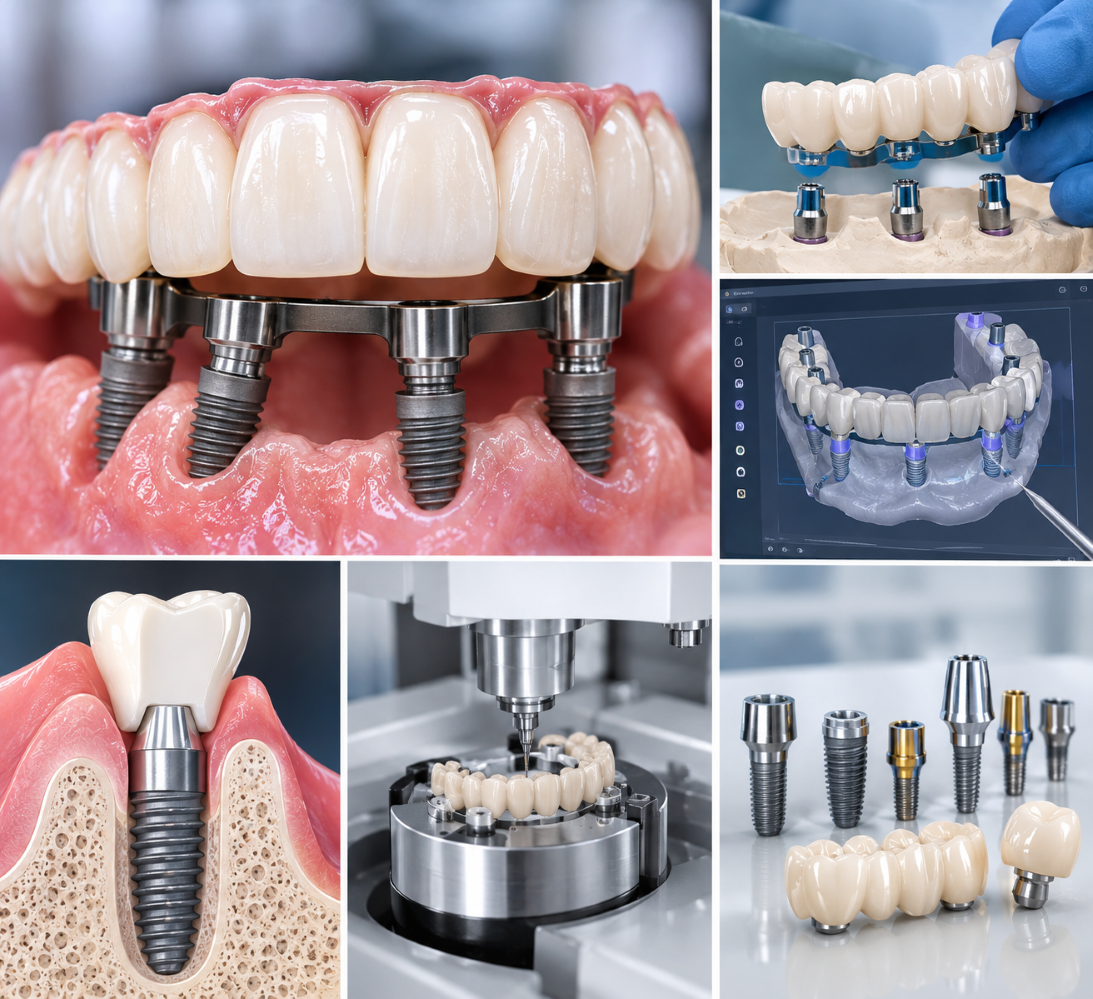
mplant-supported restorations require a high level of precision between the implant components, abutments, framework, and prosthetic restoration. One of the most important technical factors is passive fit.
A restoration with a proper fit should seat accurately without creating unnecessary tension between the prosthesis and the implants. For dental laboratories, understanding why passive fit is critical for implant-supported restorations is essential for producing predictable, functional, and long-lasting prosthetic work.
What Is Passive Fit?
Passive fit describes the relationship between an implant-supported restoration and the underlying implants when the restoration is fully seated without excessive force or strain.
Ideally, the restoration should connect to the implants accurately without requiring the dentist to force the framework into position.
This is particularly important for multi-unit implant restorations, where even small discrepancies can become significant when several implants are connected by one rigid framework.
Why Does Passive Fit Matter?
Implants are firmly integrated into the surrounding bone and do not have the same periodontal ligament mobility as natural teeth.
Because of this, discrepancies between the implant positions and the prosthetic framework cannot be compensated for in the same way that natural teeth can accommodate minor movement.
A poorly fitting restoration may introduce unwanted mechanical stress into the implant system.
Potential consequences can include:
- Screw loosening
- Screw fracture
- Component wear
- Framework distortion
- Ceramic complications
- Increased stress around implant components
- Difficulty achieving proper seating
For this reason, passive fit should be considered throughout the entire laboratory workflow.
How Does the Laboratory Influence Passive Fit?
Dental technicians play an important role in achieving accurate implant-supported restorations.
The process begins with reliable clinical records. Accurate impressions or intraoral scans, correct implant components, and precise laboratory procedures are all important.
Laboratory factors that can influence fit include:
- Impression accuracy
- Scan quality
- Implant analog positioning
- Model fabrication
- CAD design
- Framework manufacturing
- Milling accuracy
- Sintering or material processing
- Final verification
Each stage can introduce small discrepancies. When multiple discrepancies accumulate, the final restoration may no longer seat as accurately as intended.
Digital Workflow and Passive Fit
Digital dentistry has significantly changed the way implant restorations are designed and manufactured.
Intraoral scanning, CAD software, and high-precision milling can help laboratories control the relationship between implant positions and the final prosthesis.
However, digital technology does not automatically guarantee accuracy.
The quality of the scan, scanbody placement, implant library, software settings, manufacturing equipment, and verification process all matter.
A carefully controlled digital workflow can reduce unnecessary inaccuracies while improving communication between the dental clinic and laboratory.
The Importance of Accurate Implant Records
For implant-supported restorations, the laboratory needs reliable information about the implant system and its three-dimensional position.
Incorrect or incomplete information can affect the design of:
- Custom abutments
- Implant crowns
- Implant bridges
- Full-arch frameworks
- Screw-retained restorations
Using the correct implant library and components is particularly important in digital workflows.
Even when the CAD design appears accurate on screen, incorrect component selection can result in a restoration that does not fit the actual clinical situation.
Passive Fit in Full-Arch Implant Restorations
Passive fit becomes especially challenging in full-arch implant restorations because several implants are connected within a single prosthetic framework.
Small positional differences between implants can accumulate across the framework.
For this reason, laboratories may use verification procedures to confirm the accuracy of the implant positions before manufacturing the definitive restoration.
A verification jig, for example, can help the clinical team evaluate whether the recorded implant positions accurately correspond to the patient’s actual intraoral situation.
What Happens When Passive Fit Is Poor?
Poor fit does not always produce an immediate visible problem.
A restoration may appear acceptable but still contain small discrepancies at the implant-prosthetic interface.
Over time, repeated functional forces may contribute to mechanical complications.
This is why visual inspection alone may not always be sufficient. Clinical verification and appropriate laboratory quality-control procedures are valuable, particularly for complex implant cases.
How Can Dental Laboratories Improve Passive Fit?
Laboratories can take several steps to improve restoration accuracy.
Use Accurate Digital or Conventional Records
The quality of the original clinical record directly influences laboratory accuracy.
Verify Implant Components
The correct implant system, scanbody, analog, abutment, and prosthetic components should be identified before production.
Maintain CAD/CAM Accuracy
Milling equipment, software, calibration, and manufacturing parameters should be regularly monitored.
Check Frameworks Before Delivery
Where appropriate, frameworks should be evaluated for seating accuracy before the final restoration is delivered.
Communicate With the Dentist
If the laboratory identifies inconsistencies between the digital file, model, and restoration, communication with the clinical team can prevent avoidable complications.
Passive Fit and Long-Term Implant Maintenance
Good prosthetic accuracy supports more than the initial delivery of an implant restoration.
A well-fitting restoration can make maintenance more predictable and help the clinical team access implant components when adjustments or repairs are required.
For patients, this can contribute to easier long-term management of their implant-supported prosthesis.
However, passive fit is only one part of successful implant treatment. Occlusion, implant positioning, tissue health, prosthetic design, hygiene access, and patient maintenance also influence long-term outcomes.
Frequently Asked Questions
What is passive fit in implant dentistry?
Passive fit refers to an implant-supported restoration seating accurately without requiring excessive force or creating unnecessary strain at the implant-restoration interface.
Why is passive fit particularly important for implants?
Implants are rigidly integrated with bone and have limited physiological movement compared with natural teeth. Therefore, inaccurate prosthetic connections can transfer unwanted forces to implant components.
Can digital dentistry improve passive fit?
Digital workflows can improve consistency and manufacturing precision, but the accuracy still depends on scanning, component selection, software, manufacturing, and verification.
Is passive fit important for single implants?
Yes. Although discrepancies may become more complex in multi-implant restorations, accurate component connections are important for single implant restorations as well.
How is passive fit checked?
Depending on the case, clinicians and technicians may use visual inspection, radiographic evaluation, verification jigs, laboratory models, and other clinical or laboratory verification methods.
Conclusion
Why passive fit is critical for implant-supported restorations comes down to precision, mechanical stability, and long-term prosthetic performance. Every stage, from clinical scanning and impression taking to CAD design and final manufacturing, can influence the accuracy of the finished restoration.
For dental laboratories, maintaining strict quality control and using accurate digital and laboratory workflows can help reduce discrepancies and create more predictable implant-supported prostheses.
Ultimately, why passive fit is critical for implant-supported restorations is not simply a technical question. It is an important part of designing implant prostheses that are accurate, functional, maintainable, and appropriate for the clinical environment.