CAD/CAM, Dental Clinic, Digital Dentistry, General

3D Printing vs CAD/CAM Milling: Which Is Better for Dental Laboratories?

Both 3D printing and CAD/CAM milling have transformed modern dental laboratories. The question is not which technology will replace the other, but which is better for each specific indication.

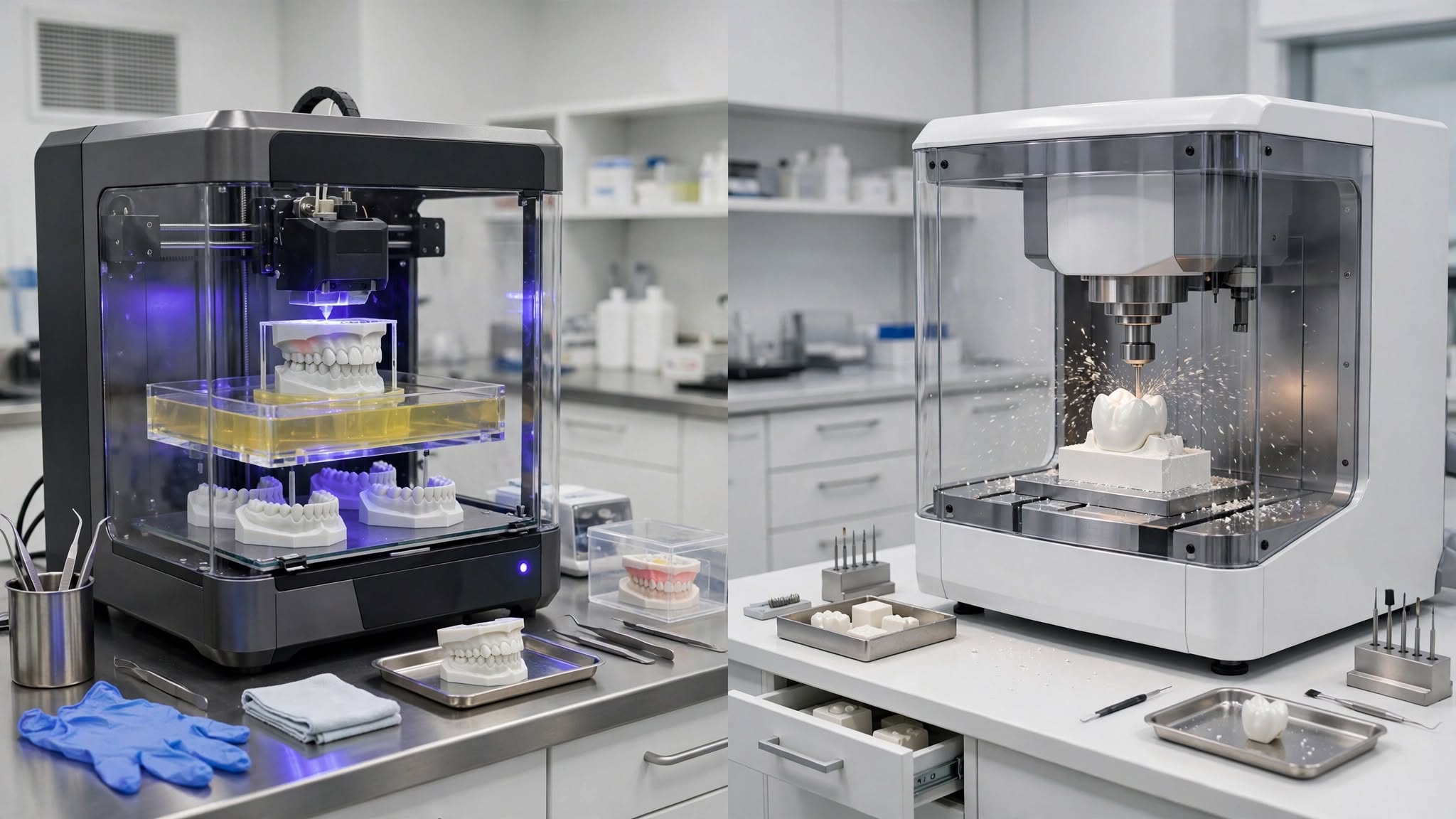
What Is CAD/CAM Milling?

CAD/CAM milling is a subtractive process. A solid block of zirconia, PMMA, wax, or titanium is milled by a 5-axis machine into a crown, bridge, or abutment. It is known for high precision, excellent mechanical properties, and a smooth surface finish. For definitive monolithic zirconia crowns, implant abutments, and long span frameworks, milling remains the gold standard.

What Is 3D Printing?

3D printing is an additive process. Liquid resin is cured layer by layer using SLA, DLP, or LCD technology. It excels in speed and material efficiency when producing multiple units at once. Ideal indications include models, surgical guides, custom trays, denture bases, temporary crowns, and clear aligner models.

Key Comparison for Dental Labs

Accuracy: Milling offers superior marginal accuracy for final restorations, typically under 20 microns. High end dental 3D printers now achieve 30 to 50 microns, which is excellent for models and provisionals but still slightly behind milling for definitive crowns.

Materials: Milled zirconia and PMMA have proven long term clinical data. Printed resins are rapidly improving, especially for permanent crown resins, but many are still limited to short to long term temporaries.

Speed and Cost: For one single crown, milling is faster. For 10 models or 20 surgical guides, 3D printing wins because the build platform produces them simultaneously. Material waste is also much lower with printing.

Workflow: The smartest dental laboratories do not choose one. They combine both. Print the model, mill the crown. Print the custom tray, mill the definitive denture teeth. This hybrid workflow maximizes ROI.

For dental laboratories, milling is better for final strength and aesthetics, while 3D printing is better for productivity, models, and surgical applications. The future belongs to labs that integrate both technologies seamlessly.

Start Your Case Planning