New Jersey, USA


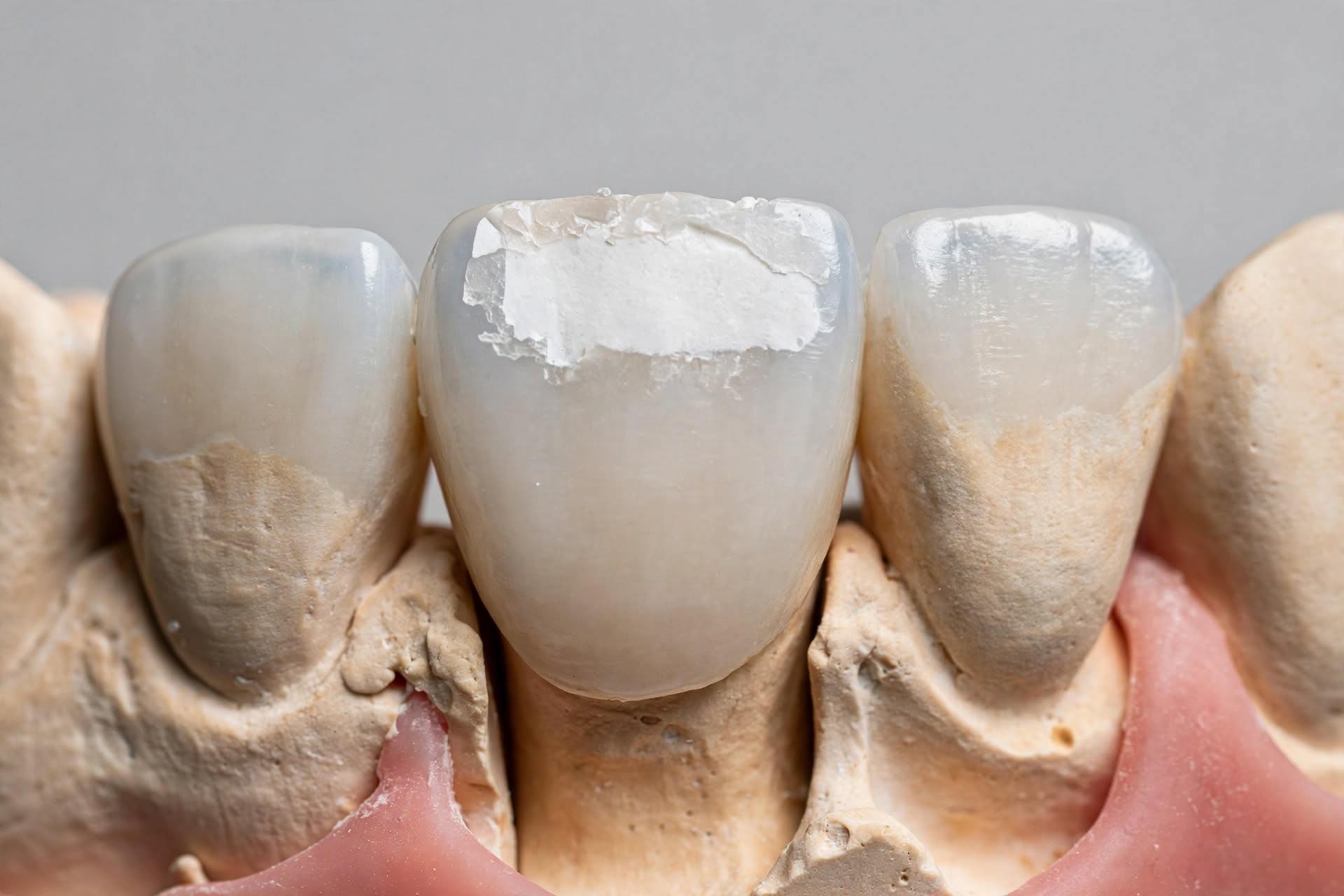
Layered zirconia restorations combine a strong zirconia framework with a veneering ceramic to achieve both durability and natural aesthetics. However, one of the common technical complications is chipping of the veneering ceramic.
Understanding the causes of chipping in layered zirconia restorations helps dental technicians improve framework design, material compatibility, firing protocols, and finishing procedures.
What Is Chipping?
Chipping occurs when small or larger pieces of the veneering ceramic fracture or separate from the zirconia framework. It can range from minor surface defects to larger fractures that affect the appearance and function of the restoration.
Although chipping can have several causes, laboratory procedures and material selection play an important role in reducing the risk.
Common Causes of Veneering Chipping
1. Incorrect Framework Design
The zirconia framework should provide adequate and uniform support for the veneering ceramic.
If the framework is poorly designed or the ceramic layer is excessively thick, unsupported areas may be more susceptible to fracture under functional forces.
CAD software can help technicians control framework anatomy and maintain appropriate ceramic thickness throughout the restoration.
2. Excessive Veneering Ceramic Thickness
A thick layer of veneering ceramic can increase the risk of internal stress and fracture.
Technicians should create sufficient space for the ceramic while maintaining a supportive zirconia framework. The final design should balance aesthetics, material thickness, and functional requirements.
3. Firing and Cooling Problems
The firing process can significantly influence the performance of layered zirconia.
Incorrect firing temperatures, inadequate firing cycles, or inappropriate cooling procedures may contribute to residual stresses within the veneering ceramic.
Following the manufacturer’s recommended firing protocol is therefore essential.
4. Thermal Expansion Differences
Zirconia and veneering ceramics have different material properties. Their interaction during heating and cooling must be carefully controlled.
If the materials are not properly matched or the processing conditions are unsuitable, stresses may develop between the zirconia framework and veneering ceramic.
5. Occlusal Overloading
Excessive occlusal forces can contribute to ceramic fracture, particularly in patients with strong parafunctional activity.
The laboratory should carefully evaluate the occlusal design and ensure that contacts are appropriately distributed.
Communication with the dentist is especially important when a patient has a history of bruxism or other significant functional forces.
6. Surface Preparation and Finishing
The condition of the zirconia surface can also influence the bonding and performance of the veneering ceramic.
Proper cleaning, surface preparation, layering, firing, and finishing procedures should be followed according to the materials being used.
Aggressive adjustments after firing may also create surface defects that can become starting points for fractures.
How Can Laboratories Reduce Chipping?
Reducing chipping in layered zirconia restorations requires attention throughout the entire laboratory workflow.
Dental technicians should focus on:
- Accurate framework design
- Controlled ceramic thickness
- Compatible zirconia and veneering materials
- Correct firing protocols
- Appropriate cooling procedures
- Careful occlusal design
- Proper finishing and polishing
- Thorough quality control
Digital CAD/CAM workflows can provide greater control over framework dimensions and ceramic support, while experienced technicians remain essential for evaluating the final design.
Layered Zirconia vs. Monolithic Zirconia
One reason laboratories may choose monolithic zirconia is to reduce the risk of veneering ceramic fracture. Since monolithic restorations are primarily made from zirconia without a separate veneering layer, there is no conventional veneering ceramic to chip.
However, layered zirconia remains valuable when advanced characterization, anatomy, and highly aesthetic results are required.
The appropriate restoration type should therefore be selected according to the individual clinical requirements.
The Importance of Quality Control
Preventing chipping in layered zirconia restorations begins before the restoration reaches the patient.
Technicians should inspect the framework, ceramic thickness, surface quality, firing results, contacts, and final anatomy. Identifying potential weaknesses during laboratory quality control can help reduce complications and the need for remakes.
Conclusion
Chipping in layered zirconia restorations can result from several interacting factors, including framework design, ceramic thickness, firing protocols, material compatibility, occlusal forces, and finishing techniques.
A carefully designed zirconia framework, controlled veneering process, and appropriate quality-control procedures can help reduce the risk of ceramic fracture.
For dental laboratories, understanding these factors is essential for producing layered zirconia restorations that combine aesthetics, function, and long-term reliability.