New Jersey, USA


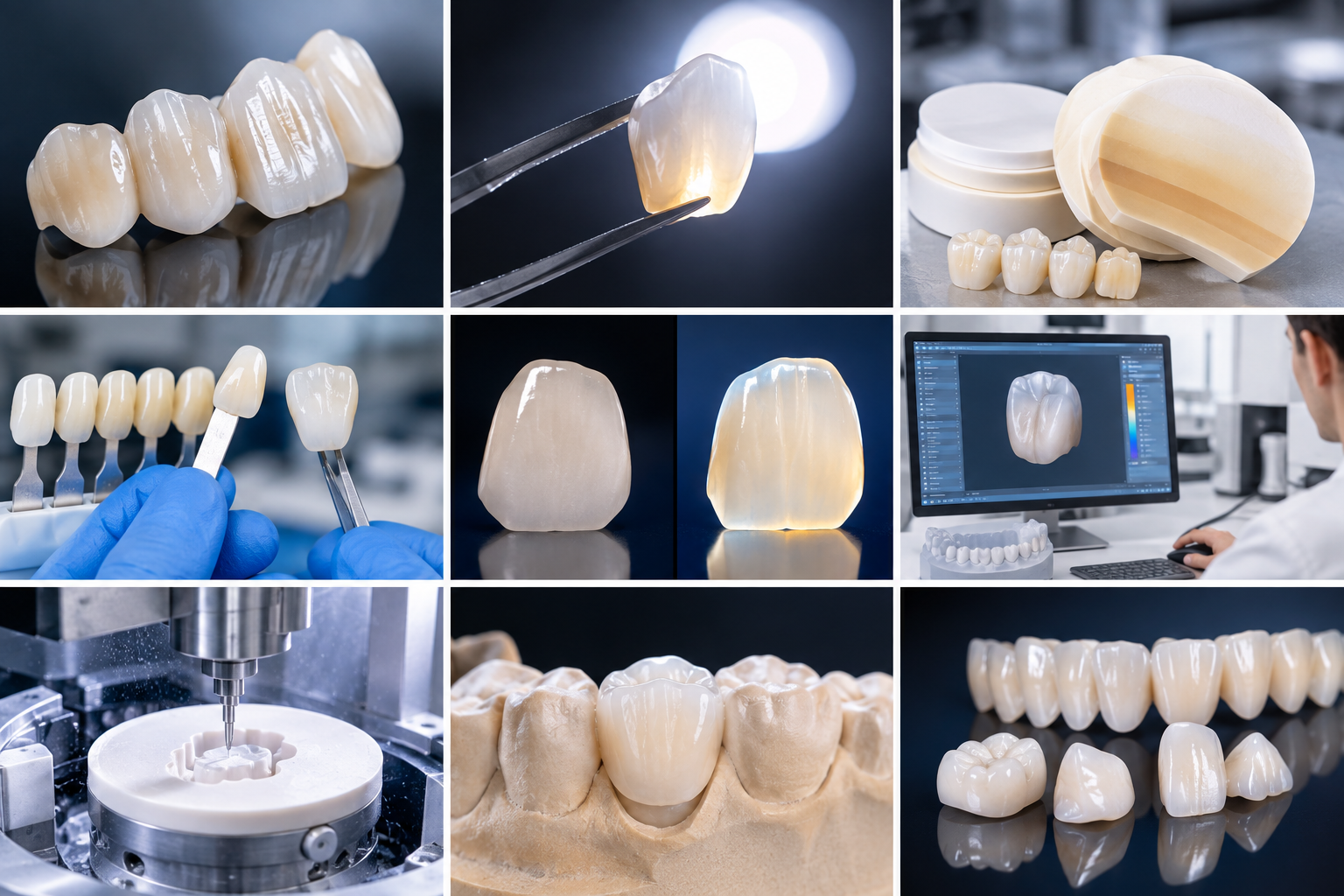
Modern zirconia has evolved significantly, offering dental laboratories a wider range of optical properties than traditional zirconia materials. One of the most important developments is increased translucency, which allows zirconia restorations to achieve a more natural and lifelike appearance.
Understanding translucency in zirconia restorations is essential for dental technicians because the correct balance between strength, opacity, and light transmission can influence both the aesthetics and clinical suitability of a restoration.
What Is Zirconia Translucency?
Translucency describes the ability of a material to allow light to pass through it while scattering some of that light. In natural teeth, light interacts with enamel and dentin in a complex way, creating depth and variation rather than a completely opaque appearance.
Modern zirconia formulations are designed to reproduce some of these optical characteristics. By controlling the composition and structure of the material, manufacturers can produce zirconia with different levels of translucency.
Why Does Translucency Matter?
The optical properties of a restoration have a direct influence on its final appearance.
Highly translucent zirconia can allow more light to pass through the restoration, helping create a brighter and more natural visual effect. However, maximum translucency is not necessarily appropriate for every clinical situation.
Dental technicians need to consider factors such as:
- Required strength
- Restoration thickness
- Preparation colour
- Tooth shade
- Cementation conditions
- Location of the restoration
- Desired aesthetic result
The goal is to select a material that provides an appropriate balance between mechanical performance and aesthetics.
Different Levels of Zirconia Translucency
Modern zirconia is available in different translucency levels. More opaque zirconia can be useful when masking a dark substrate or discoloured preparation is important.
More translucent materials may be particularly useful when aesthetic integration and light transmission are priorities.
Some modern zirconia systems also offer multilayer structures, with gradual changes in shade and translucency from the cervical region toward the incisal area.
This can help technicians create restorations with greater visual depth without relying entirely on extensive external characterization.
The Relationship Between Strength and Translucency
One of the most important considerations when selecting zirconia is the relationship between optical properties and mechanical characteristics.
In general, increasing translucency may involve changes to the material’s microstructure and composition. Different zirconia generations therefore offer different combinations of strength and light transmission.
Dental laboratories should avoid selecting a zirconia simply because it has the highest translucency. The material should instead be chosen according to the clinical requirements of the restoration.
For example, a posterior restoration exposed to significant functional forces may require different material characteristics from an anterior veneer-style restoration where optical integration is a major priority.
How Thickness Affects Translucency
Restoration thickness can significantly influence how zirconia appears.
A thin zirconia restoration may allow more light to pass through, while increasing thickness can make the restoration appear more opaque. The underlying tooth structure or preparation can also influence the final shade.
For this reason, technicians should consider the available restorative space during the design stage.
CAD software allows technicians to evaluate thickness distribution and identify areas where the restoration may be too thin or unnecessarily bulky.
Shade Selection and Multilayer Zirconia
Modern multilayer zirconia can provide gradual shade transitions within a single disc or block.
These transitions are designed to imitate the natural variation seen within a tooth, with different optical characteristics between cervical, body, and incisal regions.
Correct positioning of the restoration within the zirconia disc is therefore important. A technician can adjust the nesting position according to the desired shade distribution and anatomy of the restoration.
This makes digital planning an important part of achieving predictable aesthetics.
The Role of Surface Characterization
Translucency is only one component of a natural-looking restoration.
After milling and sintering, technicians can further modify the appearance through staining, glazing, polishing, and surface characterization.
Careful characterization can enhance:
- Surface texture
- Light reflection
- Incisal effects
- Colour variation
- Anatomical definition
The final result depends on the interaction between the zirconia’s internal optical properties and its external surface characteristics.
Digital Dentistry and Translucent Zirconia
CAD/CAM technology has made it easier for dental laboratories to control zirconia restorations with greater precision.
Digital workflows allow technicians to design anatomy, control material thickness, position restorations within multilayer discs, and plan the final appearance before manufacturing.
However, digital technology does not replace the technician’s understanding of dental materials and optical properties.
Material selection and aesthetic planning still require experience and careful evaluation of each individual case.
Choosing the Right Zirconia for Each Case
There is no single zirconia material that is ideal for every restoration.
The laboratory should consider the clinical requirements before selecting the material. Factors such as implant-supported versus tooth-supported restoration, anterior versus posterior location, preparation colour, available space, and required strength can all influence the decision.
This case-specific approach is essential when working with translucency in zirconia restorations, because the most translucent material may not always be the most appropriate choice.
Conclusion
Modern zirconia provides dental laboratories with significantly greater control over aesthetics than earlier generations of the material. Different translucency levels, multilayer structures, and advanced CAD/CAM workflows allow technicians to create restorations with improved depth, shade integration, and natural light behaviour.
Ultimately, successful translucency in zirconia restorations depends on selecting the appropriate material, controlling restoration thickness, positioning the restoration correctly within multilayer zirconia, and applying suitable finishing and characterization techniques.
The combination of material knowledge, digital technology, and skilled laboratory craftsmanship remains essential for producing predictable and natural-looking zirconia restorations.