CAD/CAM, Digital Dentistry, General

What Are the Benefits of CAD/CAM Dentistry?

Introduction

Digital technology has transformed modern dentistry, and one of the most important innovations is CAD/CAM dentistry. Standing for Computer-Aided Design and Computer-Aided Manufacturing, this technology has revolutionized the way dental restorations are designed and produced. From crowns and bridges to implant restorations and veneers, CAD/CAM systems help dental professionals deliver faster, more precise, and highly aesthetic results.

Today, CAD/CAM dentistry is widely used in dental clinics and laboratories around the world. By combining digital design with automated manufacturing, CAD/CAM dentistry improves workflow efficiency while enhancing patient satisfaction and treatment predictability.

This article explores the key advantages of CAD/CAM dentistry and explains why it has become an essential part of modern restorative care.

What Is CAD/CAM Dentistry?

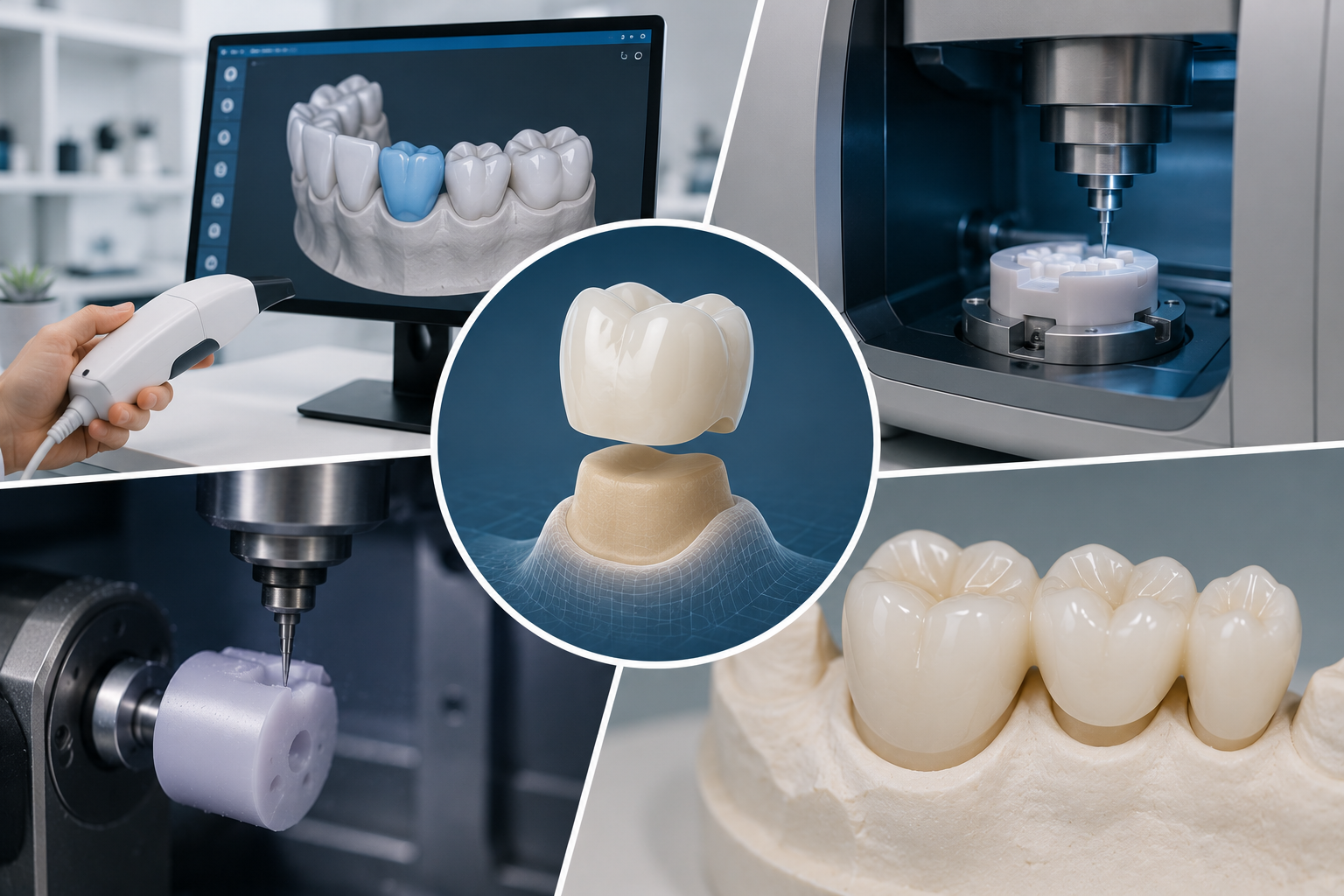
CAD/CAM dentistry uses advanced software and manufacturing technologies to create dental restorations with exceptional precision.

The process typically includes:

  • Digital impressions
  • Computer-aided design (CAD)
  • Computer-aided manufacturing (CAM)
  • Milling or 3D printing
  • Final restoration adjustments

Applications of CAD/CAM systems include:

  • Crowns
  • Bridges
  • Veneers
  • Implant restorations
  • Inlays and onlays
  • Full-mouth rehabilitations

The integration of digital technology has significantly changed the relationship between clinics and dental laboratories.


Improved Accuracy

One of the greatest benefits of CAD/CAM dentistry is accuracy.

Traditional workflows rely on physical impressions and manual fabrication methods, which may introduce small errors during production. Digital systems minimize these inaccuracies by creating highly detailed three-dimensional models.

Advantages include:

  • Better marginal fit
  • More precise restorations
  • Improved occlusion
  • Reduced remakes
  • Greater consistency

Accurate restorations contribute directly to long-term clinical success and patient satisfaction.


Faster Turnaround Times

CAD/CAM technology allows dental laboratories and clinics to complete restorations more efficiently.

Digital workflows eliminate many time-consuming steps associated with conventional methods, such as:

  • Shipping physical impressions
  • Creating stone models
  • Manual wax-ups
  • Traditional casting procedures

As a result, treatment times can be significantly reduced, allowing patients to receive their restorations faster.

For busy practices, faster production improves workflow efficiency and patient experience.


Enhanced Patient Comfort

Traditional impressions can be uncomfortable for many patients. Impression trays and impression materials may trigger gag reflexes and often require retakes.

CAD/CAM dentistry improves comfort by using intraoral scanners to capture digital impressions.

Benefits for patients include:

  • More comfortable appointments
  • Reduced gag reflex
  • Shorter treatment sessions
  • Immediate visualization of treatment plans
  • Improved confidence in the restorative process

A better patient experience often leads to higher treatment acceptance.


Superior Aesthetic Results

Modern CAD/CAM systems provide dental professionals with advanced tools for designing highly aesthetic restorations.

The technology allows technicians and clinicians to customize:

  • Tooth shape
  • Surface texture
  • Occlusion
  • Contours
  • Color integration

Combined with materials such as zirconia and lithium disilicate, CAD/CAM restorations can closely mimic the appearance of natural teeth.

This level of customization improves patient satisfaction and aesthetic outcomes.


Better Communication Between Clinics and Laboratories

Digital workflows enhance communication by allowing clinics and laboratories to exchange information instantly.

Digital files can include:

  • Intraoral scans
  • Photographs
  • CBCT images
  • Treatment plans
  • Smile designs

Improved collaboration reduces misunderstandings and helps ensure that restorations meet both clinical and aesthetic expectations.

Efficient communication is one of the major strengths of CAD/CAM technology.


Increased Consistency and Quality Control

Automated manufacturing processes improve the consistency of dental restorations.

Quality control benefits include:

  • Standardized production
  • Reduced human error
  • Predictable outcomes
  • Improved fit verification
  • Enhanced material precision

Dental laboratories can maintain high standards across a wide range of restorative cases.

As technology advances, CAD/CAM systems continue to improve production reliability.


Advantages in Implant Dentistry

Implant restorations require exceptional precision, and CAD/CAM dentistry plays an important role in achieving predictable outcomes.

Digital workflows support:

  • Accurate implant planning
  • Custom abutment design
  • Passive fit verification
  • Full-arch restoration design
  • Improved prosthetic accuracy

These advantages reduce complications and contribute to the long-term success of implant-supported restorations.


Long-Term Benefits for Dental Practices

Investing in CAD/CAM technology offers significant long-term advantages for dental clinics and laboratories.

These benefits include:

Increased Productivity

Digital systems streamline workflows and improve efficiency.

Fewer Adjustments

Accurate restorations reduce chairside modifications.

Enhanced Reputation

Patients increasingly value practices that use advanced technology.

Greater Treatment Predictability

Digital planning improves consistency and long-term results.

By adopting digital workflows, clinics can remain competitive in an evolving dental industry.


The Future of CAD/CAM Dentistry

The future of CAD/CAM dentistry continues to evolve with innovations such as:

  • Artificial intelligence-assisted design
  • Advanced 3D printing
  • Improved restorative materials
  • Cloud-based collaboration
  • Automated quality control

These technologies will continue to improve treatment outcomes and expand the possibilities of digital dentistry.

As the industry evolves, CAD/CAM dentistry will remain at the center of modern restorative and implant treatments.


Conclusion

CAD/CAM dentistry has transformed restorative dentistry by improving accuracy, efficiency, communication, and patient comfort. Through digital design and automated manufacturing, dental professionals can create restorations that are highly precise, aesthetically pleasing, and durable.

As technology continues to advance, CAD/CAM dentistry will play an even greater role in shaping the future of dental care. For clinics and laboratories seeking predictable results and streamlined workflows, CAD/CAM dentistry offers clear and lasting benefits.

Start Your Case Planning