New Jersey, USA


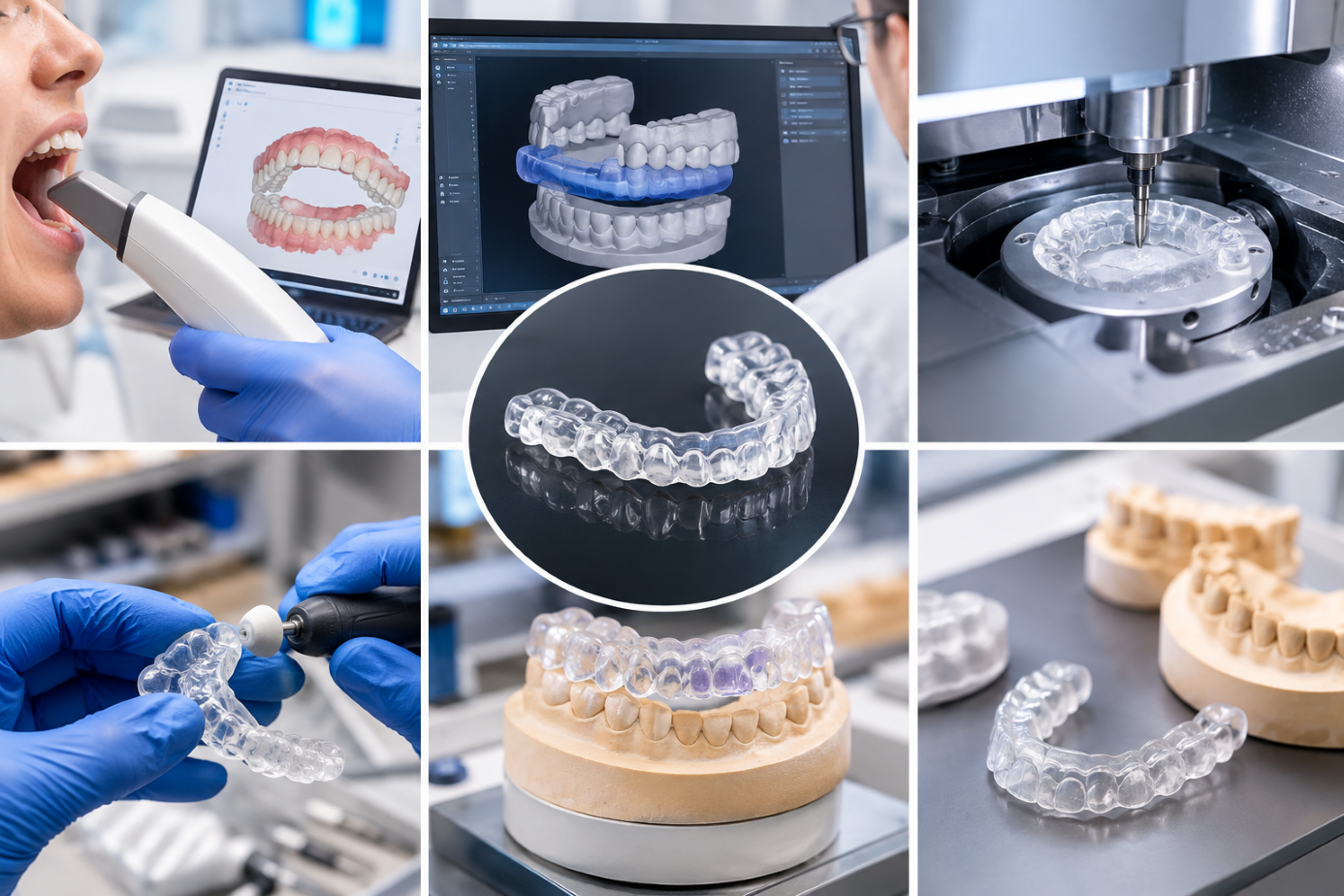
Occlusal splints are custom-made dental appliances designed to help manage excessive forces between the upper and lower teeth. Although they may look relatively simple, producing an accurate appliance requires careful clinical records, digital or conventional laboratory techniques, and precise attention to occlusion.
The dental laboratory plays an important role in transforming the dentist’s prescription and patient records into a functional appliance that fits comfortably and performs as intended.
What Are Occlusal Splints?
Occlusal splints are removable appliances that are typically designed to control or modify contact between the upper and lower teeth. Depending on the clinical indication, they may be used for patients experiencing bruxism, excessive tooth wear, muscle discomfort, or other occlusal concerns.
The design of an appliance depends on the patient’s individual bite, dentition, clinical requirements, and the dentist’s treatment objectives. For this reason, an appliance should not be produced using a generic design without considering the patient’s specific records.
Step 1: Collecting Accurate Patient Records
The laboratory workflow begins with accurate clinical information from the dental practice.
Depending on the case, the laboratory may receive:
- Intraoral scans
- Digital bite registrations
- Conventional impressions
- Opposing arch records
- Clinical photographs
- Prescription and design instructions
- Information about the intended appliance and occlusal requirements
The quality of these records directly affects the accuracy of the final appliance. An inaccurate scan or bite registration can result in an appliance that requires significant adjustment.
Step 2: Assessing the Digital or Physical Models
Once the laboratory receives the case, the dental technician evaluates the models or digital scans.
Important areas include tooth position, available space, existing restorations, undercuts, occlusal relationships, and the overall condition of the dentition.
For digital workflows, the technician can inspect the patient’s arches within CAD software and evaluate their relationship before beginning the appliance design.
This stage helps identify potential problems before manufacturing begins.
Step 3: Establishing the Occlusal Relationship
One of the most important stages in designing an occlusal appliance is accurately reproducing the patient’s bite.
The upper and lower arches must be positioned according to the clinical records provided by the dentist. Depending on the treatment objective, the technician may need to evaluate the intended contacts and functional movements.
A digital articulator or virtual articulation system can help technicians visualize the relationship between the arches and identify potential areas of interference.
Step 4: Designing the Appliance
The technician then creates the appliance according to the prescription.
The design can include parameters such as:
- Appliance thickness
- Retention
- Extension
- Occlusal surface morphology
- Contact areas
- Relief areas
- Edge contours
- Material requirements
Digital CAD software allows these parameters to be controlled more consistently and provides technicians with greater visibility during the design process.
However, software does not replace professional judgment. The technician must understand how the appliance should function and recognize when a digital design may require modification.
Step 5: Considering Material Selection
Material selection depends on the intended application and the dentist’s prescription.
Common laboratory options may include different types of acrylic or digitally manufactured resin materials. Each material has specific characteristics relating to strength, flexibility, wear resistance, transparency, and manufacturing requirements.
The material should be selected according to the clinical purpose rather than simply based on appearance.
Step 6: Manufacturing the Splint
After the design is approved, the appliance can be manufactured using either conventional or digital laboratory techniques.
Traditional workflows may involve processing acrylic material over a model. Digital workflows can involve CAD design followed by milling or additive manufacturing.
Digital production can provide advantages in terms of repeatability and workflow efficiency. If a replacement appliance is required later, the stored digital design may also help the laboratory reproduce the original design more consistently.
Step 7: Finishing and Quality Control
Manufacturing is not the final step.
After production, the technician checks the appliance for:
- Surface defects
- Sharp edges
- Proper extension
- Material thickness
- Adaptation to the model
- Occlusal contacts
- Overall comfort and finish
Finishing and polishing are particularly important because the appliance needs to have smooth surfaces and appropriately rounded borders.
For digitally manufactured appliances, the technician should also verify that the final product corresponds accurately with the original digital design.
Why Occlusal Accuracy Matters
An appliance can be technically well manufactured but still require clinical adjustment if the bite registration or clinical information was inaccurate.
For this reason, communication between the dentist and dental laboratory is essential.
The dentist provides the clinical diagnosis, prescription, and treatment objectives, while the laboratory translates this information into a precisely fabricated appliance.
Neither stage should be considered independently.
The Role of Digital Dentistry
Digital dentistry has changed how many laboratories approach appliance fabrication.
With intraoral scanning and CAD/CAM technology, technicians can design appliances directly from digital models, visualize occlusal relationships, modify designs efficiently, and manufacture appliances with increasingly controlled workflows.
Digital records can also improve communication between the dental practice and laboratory because the dentist and technician can work with the same digital information.
Nevertheless, digital technology should support—not replace—technical expertise and clinical judgment.
Common Laboratory Challenges
Several factors can affect the final result, including:
- Inaccurate impressions or scans
- Incorrect bite registration
- Insufficient clinical information
- Incorrect digital articulation
- Inappropriate material selection
- Manufacturing inaccuracies
- Excessive or insufficient appliance thickness
- Inadequate finishing
Identifying these issues early can reduce remakes and minimize chairside adjustment time.
Dentist–Technician Communication
Successful appliance fabrication depends on clear communication.
The dentist should provide detailed information about the patient’s clinical needs and the desired appliance. The technician should be able to clarify any unclear instructions before beginning the design or manufacturing process.
This collaborative approach is particularly valuable for complex cases or patients with significant occlusal changes.
Conclusion
The design of occlusal splints is a detailed laboratory process that combines accurate patient records, occlusal analysis, digital or conventional design techniques, appropriate material selection, and careful quality control.
Modern CAD/CAM technology can make the workflow more efficient and reproducible, but experienced dental technicians remain essential for evaluating the design and ensuring that the finished appliance meets the clinical requirements.
Ultimately, well-designed occlusal splints are the result of cooperation between the dentist, dental technician, digital technology, and a carefully controlled manufacturing workflow. By maintaining accuracy at every stage, dental laboratories can help provide appliances that are precise, functional, and comfortable for the patient.