New Jersey, USA


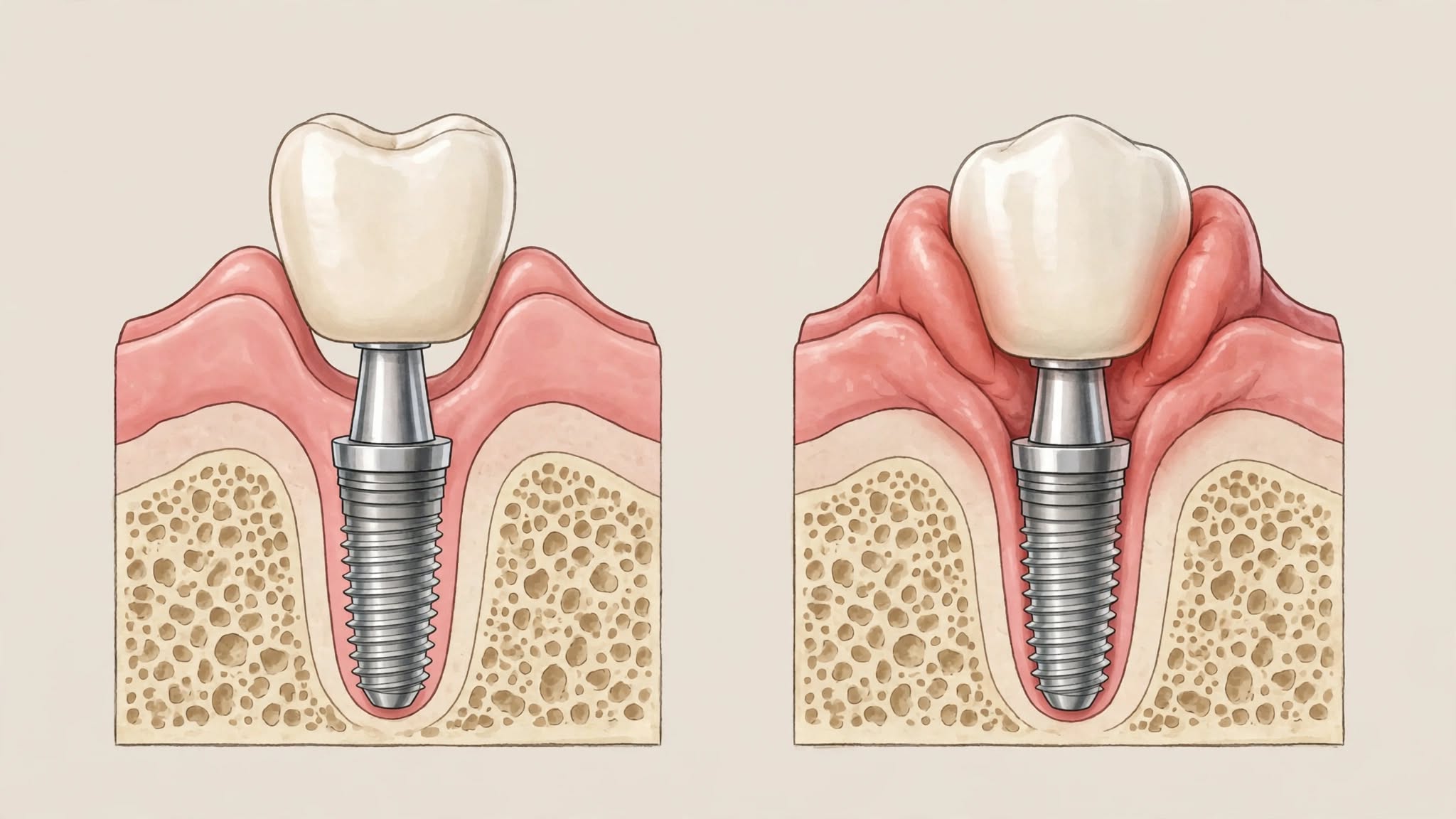
The emergence profile is one of the most important design considerations when creating an implant crown. It describes how the crown transitions from the implant or abutment through the soft tissue to the visible tooth structure. A well-designed emergence profile supports both functional performance and natural aesthetics.
What Is an Emergence Profile?
The emergence profile refers to the contour of an implant restoration as it emerges through the surrounding gingival tissue. Unlike a natural tooth, an implant does not have a periodontal ligament or natural root structure. Therefore, the restoration must be carefully designed to create an appropriate transition between the implant, soft tissue, and crown.
The emergence profile in implant crowns should be planned according to the implant position, available soft tissue, gingival thickness, and final crown shape. An excessively bulky or incorrectly contoured profile can place unnecessary pressure on the surrounding tissue and affect the appearance of the restoration.
Why Is the Emergence Profile Important?
A properly designed emergence profile in implant crowns can contribute to several important clinical and aesthetic outcomes:
- Natural appearance: The crown should gradually emerge from the gum in a way that resembles a natural tooth.
- Soft-tissue health: Appropriate contours can help create a cleansable and biologically compatible restoration.
- Gingival stability: Correct support of the surrounding tissue may contribute to maintaining a harmonious gingival contour.
- Hygiene: Over-contoured restorations can make plaque removal more difficult, while an appropriate profile can provide better access for oral hygiene.
- Function: The crown contour should work with the patient’s bite and surrounding teeth without creating unnecessary functional problems.
The Role of Digital Dental Technology
Modern CAD/CAM workflows allow dental technicians to control the emergence profile with a high level of precision. Digital scans, implant libraries, and 3D design software can help technicians evaluate the relationship between the implant position, soft tissue, and proposed crown.
The emergence profile in implant crowns should not be considered separately from the overall restoration. The technician must consider implant placement, abutment design, gingival architecture, contact points, occlusion, and the desired final tooth morphology.
Communication Between Dentist and Dental Laboratory
Successful implant restorations require close communication between the dentist and dental laboratory. Clinical photographs, digital impressions, implant information, soft-tissue details, and information about the desired crown shape can help the technician create a more predictable restoration.
For anterior implant crowns in particular, even small differences in contour can affect the appearance of the gingival margin and the symmetry of the smile. Careful planning of the emergence profile can therefore make an important difference to the final result.
Conclusion
The emergence profile is more than an aesthetic detail. It is an essential part of implant crown design that connects the restoration with the surrounding soft tissue. By combining accurate clinical information, careful digital planning, and precise laboratory techniques, dental professionals can create implant crowns that are functional, cleansable, and visually harmonious.
A carefully planned emergence profile in implant crowns can help support the long-term quality and natural appearance of implant-supported restorations.