New Jersey, USA


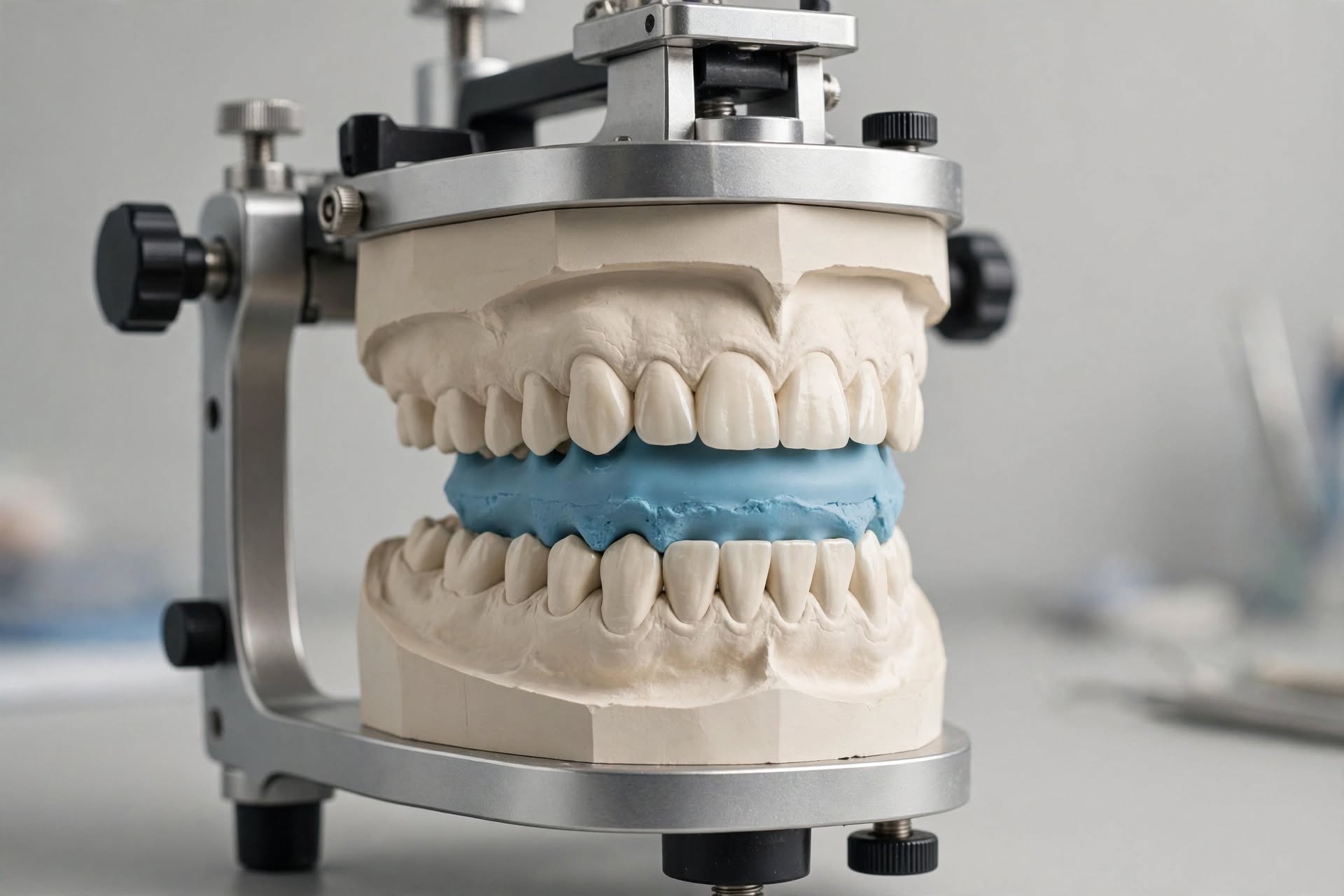
A precise relationship between the upper and lower arches is essential for producing functional and well-fitting dental restorations. Even when digital impressions, CAD/CAM technology, and high-quality materials are used, an inaccurate bite record can affect the final result.
For dental laboratories, understanding the patient’s interarch relationship provides important information for restoration design, especially in complex cases involving multiple teeth, implants, crowns, bridges, or full-mouth rehabilitation.
What Is Bite Registration?
Bite registration is a record of the relationship between the upper and lower teeth when the jaws are positioned in a specific occlusal relationship.
The record allows the dental laboratory to reproduce the patient’s interarch relationship during the fabrication process. Depending on the workflow, this information can be transferred using conventional bite registration materials or captured digitally through intraoral scanning.
An accurate bite registration helps the technician position the digital or physical models correctly and design the restoration according to the patient’s existing occlusion.
Why Is Accurate Bite Registration Important?
An inaccurate bite record can lead to discrepancies between the patient’s actual occlusion and the relationship reproduced in the laboratory.
Potential consequences may include:
- Premature occlusal contacts
- Excessive chairside adjustments
- Difficulty achieving proper intercuspation
- Incorrect restoration anatomy
- Functional discomfort
- Increased risk of remakes
- Complications in complex restorative cases
For this reason, bite registration should be considered an important part of case documentation rather than simply another laboratory record.
How Does Bite Registration Affect Dental Restoration Accuracy?
When the laboratory receives an accurate bite relationship, technicians can position the upper and lower arches appropriately during the design process.
This is particularly important when fabricating:
- Crowns
- Bridges
- Veneers
- Implant-supported restorations
- Full-mouth rehabilitations
- Multiple-unit restorations
- Complex occlusal cases
The more extensive the treatment, the more important it becomes to establish a reliable relationship between the arches.
Conventional vs Digital Bite Registration
Traditional workflows commonly use bite registration materials to record the patient’s occlusion. These records can then be used with physical casts and articulators.
Digital dentistry offers another approach. Intraoral scanners can capture buccal bite scans and digitally align the upper and lower arches.
Digital bite registration can simplify communication and integration with CAD software, but its accuracy still depends on proper scanning technique, patient positioning, stable occlusion, and sufficient scan data.
Common Causes of Bite Registration Errors
Several factors can affect the quality of a bite record.
Patient Movement
Movement during recording or scanning can make it difficult to capture a stable relationship between the arches.
Incomplete Scan Data
Insufficient or inconsistent scan information can affect digital alignment and may produce an incorrect interarch relationship.
Material Distortion
In conventional workflows, distortion of the bite registration material can occur if the material is handled or stored incorrectly.
Incorrect Patient Closure
If the patient does not close into the intended position during recording, the laboratory may receive a relationship that does not accurately represent the clinical situation.
Poor Communication
If the dentist does not provide clear information about the intended bite or any special clinical considerations, the technician may have difficulty interpreting the record.
Bite Registration in Digital Dental Laboratories
Modern dental laboratories can integrate bite scans with digital impressions and CAD software to create a virtual representation of the patient’s arches.
This workflow allows technicians to evaluate:
- Interarch space
- Occlusal contacts
- Tooth position
- Restoration height
- Cusp relationships
- Available restorative space
Digital workflows can also make it easier to communicate potential discrepancies with the dental practice before manufacturing begins.
The Role of Bite Registration in Implant Restorations
Implant-supported restorations require careful consideration of occlusal relationships. Unlike natural teeth, implants do not have the same periodontal ligament-mediated response to functional loading.
For implant cases, reliable bite information can therefore support appropriate restoration design and occlusal management.
This becomes particularly important for multiple implants and full-arch restorations, where changes in the relationship between the arches can influence the entire prosthetic design.
How Dentists Can Improve Bite Records
The quality of the laboratory result begins with the quality of the clinical information provided.
Dentists can support better laboratory communication by:
- Ensuring the patient is positioned correctly
- Recording the intended occlusal relationship carefully
- Checking the stability of the bite
- Capturing sufficient digital scan data
- Providing additional clinical photographs when appropriate
- Clearly communicating unusual occlusal conditions
- Reviewing questionable records before sending the case
When a bite record appears inconsistent with the clinical situation, communication with the laboratory before fabrication can help prevent unnecessary errors.
How Accurate Bite Registration Can Reduce Remakes
An accurate bite registration gives the dental technician a more reliable foundation for restoration design.
If the upper and lower arches are incorrectly related during laboratory fabrication, the final restoration may require significant chairside adjustment or, in some cases, remanufacturing.
By improving the quality of the initial records, dental teams can reduce avoidable discrepancies and make the restorative workflow more predictable.
The Importance of Dentist–Technician Collaboration
Bite registration should not be viewed as the responsibility of only the dentist or the laboratory.
The dentist is responsible for capturing and communicating the clinical relationship, while the technician must correctly interpret and incorporate that information into the restoration design.
When both sides communicate effectively, potential inconsistencies can be identified earlier in the workflow.
Conclusion
A restoration can only be as accurate as the clinical information used to design it. An accurate bite registration helps dental technicians reproduce the relationship between the upper and lower arches and supports more predictable restoration fabrication.
Whether a laboratory uses conventional articulators or advanced digital workflows, reliable occlusal records remain an important part of restorative dentistry.
Combining precise bite records with digital impressions, detailed clinical information, and effective dentist–technician communication can help improve restoration accuracy and reduce unnecessary adjustments and remakes.
Frequently Asked Questions
What is the purpose of bite registration?
Bite registration records the relationship between the upper and lower arches so the laboratory can reproduce the patient’s occlusion during restoration design and fabrication.
What happens if a bite registration is inaccurate?
An inaccurate record can contribute to incorrect restoration positioning, premature contacts, increased chairside adjustments, functional problems, or the need for a remake.
Is digital bite registration more accurate than conventional methods?
Digital and conventional techniques can both provide useful results when performed correctly. Accuracy depends on the technique, equipment, clinical conditions, and quality of the recorded information.
Why is bite registration important for implant restorations?
It helps the laboratory understand the patient’s interarch relationship and supports appropriate restoration design, particularly in multiple-unit and full-arch implant cases.
How can dentists improve bite registration accuracy?
Careful patient positioning, stable closure, sufficient scan data, appropriate recording technique, and clear communication with the dental laboratory can all improve the reliability of the bite record.