New Jersey, USA


Introduction
Digital dentistry has transformed the way dental professionals diagnose, plan, and deliver treatments. Among the most important innovations in modern dental workflows are intraoral scanners. These advanced devices capture highly detailed digital impressions of a patient’s oral structures, replacing many traditional impression techniques.
As clinics and dental laboratories increasingly adopt digital workflows, intraoral scanners have become essential tools for improving precision, efficiency, and patient comfort. Their ability to generate accurate digital data helps reduce errors and contributes to better-fitting restorations and more predictable treatment outcomes.
This article explores how intraoral scanners improve dental accuracy and why they have become a cornerstone of modern dentistry.
What Are Intraoral Scanners?
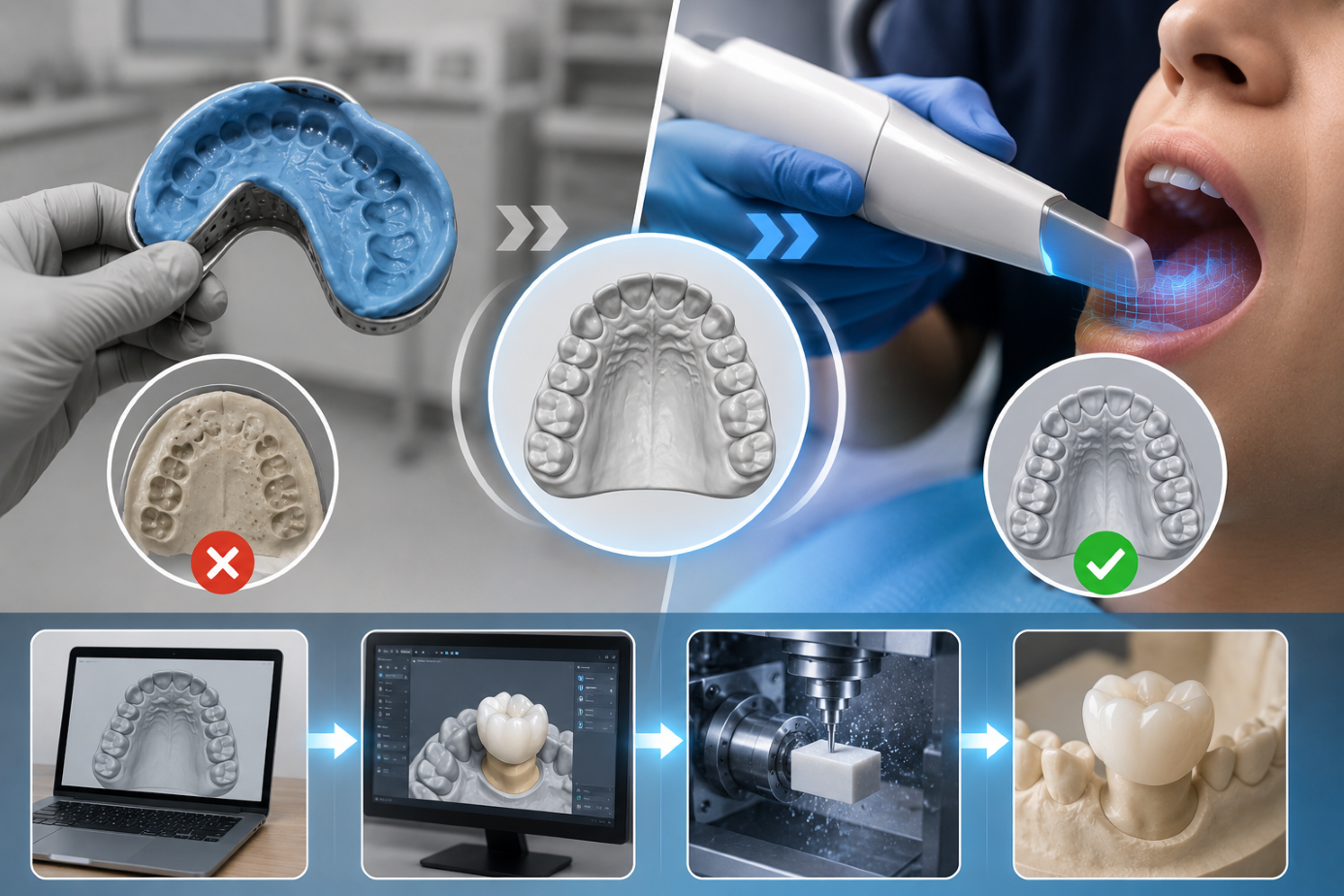
Intraoral scanners are handheld digital devices used to capture three-dimensional images of teeth, gums, and surrounding oral structures. Instead of using traditional impression materials, dentists scan the patient’s mouth and create an accurate digital model within minutes.
The digital files generated by intraoral scanners can be immediately shared with dental laboratories, CAD/CAM systems, and treatment planning software.
Common applications include:
- Crowns and bridges
- Veneers
- Implant restorations
- Orthodontic treatments
- Full-mouth rehabilitations
- Digital smile design
The widespread adoption of intraoral scanners continues to improve workflow efficiency throughout the dental industry.
Eliminating Traditional Impression Errors
One of the biggest advantages of intraoral scanners is the reduction of errors commonly associated with conventional impressions.
Traditional impressions may be affected by:
- Material distortion
- Air bubbles
- Incomplete impressions
- Patient movement
- Improper tray positioning
These issues can compromise restoration accuracy and lead to additional appointments or remakes.
In contrast, intraoral scanners provide highly detailed digital impressions that significantly reduce the risk of impression-related inaccuracies.
Improved Precision for Dental Restorations
Accurate impressions are the foundation of successful restorative dentistry. Even minor inaccuracies can affect the fit, function, and longevity of dental restorations.
Intraoral scanners capture thousands of data points to create detailed three-dimensional models. This level of precision enables dental laboratories to fabricate restorations with exceptional accuracy.
Benefits include:
- Better marginal fit
- Improved occlusion
- Reduced chairside adjustments
- Enhanced restoration longevity
- Greater patient satisfaction
The precision offered by intraoral scanners helps ensure predictable clinical outcomes across a wide range of treatments.
Enhanced Implant Treatment Accuracy
Implant dentistry requires an extremely high level of precision. Small discrepancies in implant impressions can lead to complications in restoration fit and function.
Modern intraoral scanners help improve implant workflows by accurately capturing implant positions and surrounding soft tissue anatomy.
Advantages for implant cases include:
- More precise implant restorations
- Improved passive fit
- Better prosthetic planning
- Reduced risk of complications
- Faster communication with laboratories
As digital implant workflows continue to evolve, intraoral scanners are becoming indispensable tools for implant treatment planning and restoration design.
Faster Communication with Dental Laboratories
Traditional impression workflows often require physical shipping, which can increase turnaround times and introduce the risk of damage or distortion.
Digital files created by intraoral scanners can be transmitted instantly to dental laboratories anywhere in the world.
This improved communication provides:
- Faster case processing
- Greater workflow efficiency
- Immediate case review
- Better collaboration between clinicians and technicians
- Reduced treatment delays
The seamless integration of intraoral scanners into digital workflows enhances both speed and accuracy.
Improved Patient Experience
Patient comfort plays an important role in modern dentistry. Many patients find traditional impression materials uncomfortable and unpleasant.
Intraoral scanners eliminate the need for impression trays and materials, creating a more comfortable experience.
Benefits for patients include:
- Reduced gag reflex
- Shorter appointment times
- Greater treatment acceptance
- Improved comfort
- Enhanced confidence in digital technology
The patient-friendly nature of intraoral scanners contributes to a more positive clinical experience.
Integration with CAD/CAM Technology
One of the greatest strengths of intraoral scanners is their compatibility with CAD/CAM systems. Digital impressions can be immediately transferred into design software, allowing restorations to be planned and manufactured with exceptional precision.
The integration of intraoral scanners with CAD/CAM technology enables:
- Fully digital workflows
- Faster restoration production
- Improved consistency
- Reduced manual errors
- Enhanced treatment predictability
This digital connectivity has transformed the relationship between dental clinics and laboratories.
Long-Term Benefits for Dental Practices
The adoption of intraoral scanners offers numerous long-term advantages for dental practices.
These benefits include:
Increased Efficiency
Digital impressions reduce workflow complexity and improve productivity.
Fewer Remakes
Improved accuracy results in fewer restoration adjustments and remakes.
Enhanced Reputation
Patients increasingly appreciate practices that utilize advanced technology.
Better Clinical Outcomes
More accurate restorations contribute to long-term treatment success.
By investing in intraoral scanners, dental practices position themselves for future growth and innovation.
The Future of Intraoral Scanning
The technology behind intraoral scanners continues to evolve rapidly. Future advancements are expected to improve scanning speed, image quality, and artificial intelligence integration.
Emerging trends include:
- AI-assisted diagnostics
- Real-time treatment simulations
- Enhanced orthodontic planning
- Improved soft tissue scanning
- Greater cloud-based collaboration
As digital dentistry advances, intraoral scanners will continue to play a critical role in delivering highly accurate and efficient patient care.
Conclusion
Intraoral scanners have revolutionized modern dentistry by improving accuracy, efficiency, and patient comfort. Their ability to capture highly detailed digital impressions reduces traditional impression errors and supports better-fitting restorations.
From restorative and implant dentistry to orthodontics and digital smile design, intraoral scanners have become essential tools in contemporary dental workflows. As technology continues to advance, their role in improving dental accuracy and treatment outcomes will only continue to grow.