CAD/CAM, Digital Dentistry, General

How Does CAD/CAM Dentistry Work?

Introduction

Modern dentistry has undergone a remarkable transformation with the adoption of digital technologies. One of the most significant innovations is CAD/CAM dentistry, which has revolutionized the way dental restorations are designed and manufactured. By combining advanced software with precision manufacturing systems, CAD/CAM dentistry allows dental professionals and laboratories to create highly accurate restorations more efficiently than ever before.

Today, CAD/CAM dentistry plays a crucial role in crowns, bridges, veneers, implant restorations, and full-mouth rehabilitations. Its ability to improve accuracy, reduce treatment times, and enhance patient satisfaction has made it a standard component of modern dental workflows.

What Is CAD/CAM Dentistry?

CAD/CAM dentistry stands for Computer-Aided Design (CAD) and Computer-Aided Manufacturing (CAM). This digital technology enables dental restorations to be designed on specialized software and then manufactured using automated milling machines or 3D printing systems.

The primary goal of CAD/CAM dentistry is to improve precision while reducing the manual processes traditionally involved in dental restoration fabrication.

Applications of CAD/CAM dentistry include:

  • Dental crowns
  • Bridges
  • Veneers
  • Implant restorations
  • Inlays and onlays
  • Full-arch prosthetics

As digital workflows continue to advance, CAD/CAM dentistry has become an essential tool for both dental clinics and laboratories.


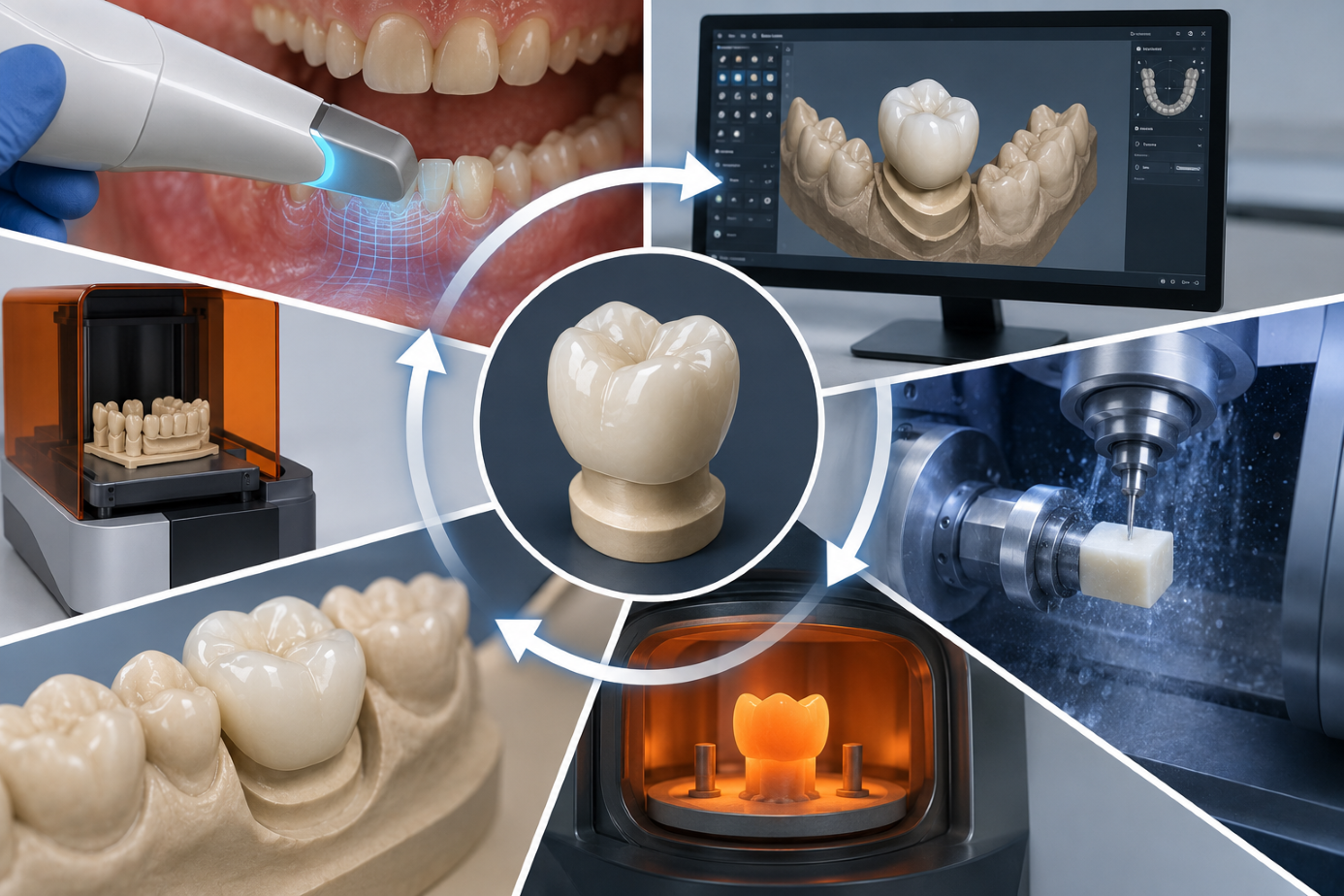
Step 1: Digital Impression Scanning

The first stage of CAD/CAM dentistry begins with capturing a digital impression of the patient’s teeth and oral structures.

Instead of traditional impression materials, dentists use intraoral scanners to create highly detailed three-dimensional images. These digital scans are more comfortable for patients and provide greater accuracy for restoration design.

Benefits of digital scanning include:

  • Improved patient comfort
  • Greater precision
  • Faster data collection
  • Reduced impression errors
  • Easier communication with laboratories

The digital scan serves as the foundation for the entire CAD/CAM dentistry workflow.


Step 2: Computer-Aided Design (CAD)

Once the digital impression is captured, the data is transferred into CAD software. During this stage, technicians or dentists design the restoration virtually using advanced computer tools.

The software allows users to:

  • Design crown anatomy
  • Adjust occlusion
  • Refine margins
  • Customize tooth morphology
  • Optimize esthetics

One of the greatest advantages of CAD/CAM dentistry is the ability to visualize and modify restorations before manufacturing begins.

This digital planning process improves accuracy and minimizes the need for adjustments after placement.


Step 3: Computer-Aided Manufacturing (CAM)

After the design is approved, the restoration moves to the manufacturing phase.

During CAM production, automated systems create the final restoration using materials such as:

  • Zirconia
  • Lithium disilicate
  • Hybrid ceramics
  • PMMA
  • Composite materials

Manufacturing methods may include:

Milling

Milling machines carve restorations from solid material blocks with exceptional precision.

3D Printing

Modern dental laboratories increasingly use 3D printing technology for models, surgical guides, temporary restorations, and other dental applications.

The manufacturing stage demonstrates the efficiency and consistency that make CAD/CAM dentistry so valuable in restorative dentistry.


Materials Used in CAD/CAM Dentistry

A wide variety of materials can be processed using CAD/CAM systems, allowing clinicians to choose the most appropriate option for each case.

Popular materials include:

Zirconia

Known for its strength, durability, and natural appearance.

Lithium Disilicate

Highly esthetic and commonly used for anterior restorations.

Hybrid Ceramics

Provide a balance between strength and flexibility.

PMMA

Often used for temporary restorations and long-term provisional solutions.

The versatility of materials is one reason why CAD/CAM dentistry has become so widely adopted.


Benefits of CAD/CAM Dentistry

The growing popularity of CAD/CAM dentistry is driven by numerous clinical and laboratory advantages.

Improved Accuracy

Digital design and manufacturing significantly reduce human error.

Faster Turnaround Times

Digital workflows streamline production and accelerate restoration delivery.

Better Patient Experience

Digital impressions are more comfortable than conventional techniques.

Enhanced Esthetics

Advanced software enables highly customized and natural-looking restorations.

Consistent Quality

Automated manufacturing ensures reliable and repeatable results.

These advantages have helped CAD/CAM dentistry become a cornerstone of modern restorative treatment.


The Role of Dental Laboratories

Dental laboratories are essential to the success of CAD/CAM dentistry. Skilled dental technicians use digital tools to optimize restoration design, verify fit, and ensure esthetic excellence.

Modern laboratories often integrate:

  • CAD design software
  • Milling machines
  • 3D printers
  • Digital implant planning systems
  • Quality control protocols

By combining digital technology with technical expertise, laboratories can deliver restorations that meet the highest clinical standards.


Future Trends in CAD/CAM Dentistry

The future of CAD/CAM dentistry continues to evolve rapidly. Emerging technologies are expected to further improve efficiency, precision, and patient outcomes.

Key developments include:

  • Artificial intelligence-assisted design
  • Advanced 3D printing materials
  • Cloud-based collaboration platforms
  • Fully digital treatment workflows
  • Enhanced facial and smile design integration

As innovation continues, CAD/CAM dentistry will remain a driving force in digital dentistry and restorative care.


Conclusion

CAD/CAM dentistry has transformed the way dental restorations are designed and manufactured. Through digital scanning, computer-aided design, and automated manufacturing, clinicians and dental laboratories can produce highly accurate, efficient, and aesthetically pleasing restorations.

As technology continues to advance, CAD/CAM dentistry will play an even greater role in improving treatment outcomes, streamlining workflows, and enhancing patient satisfaction. For modern dental practices and laboratories, embracing CAD/CAM dentistry is essential for staying competitive in an increasingly digital world.

Start Your Case Planning