New Jersey, USA


Introduction
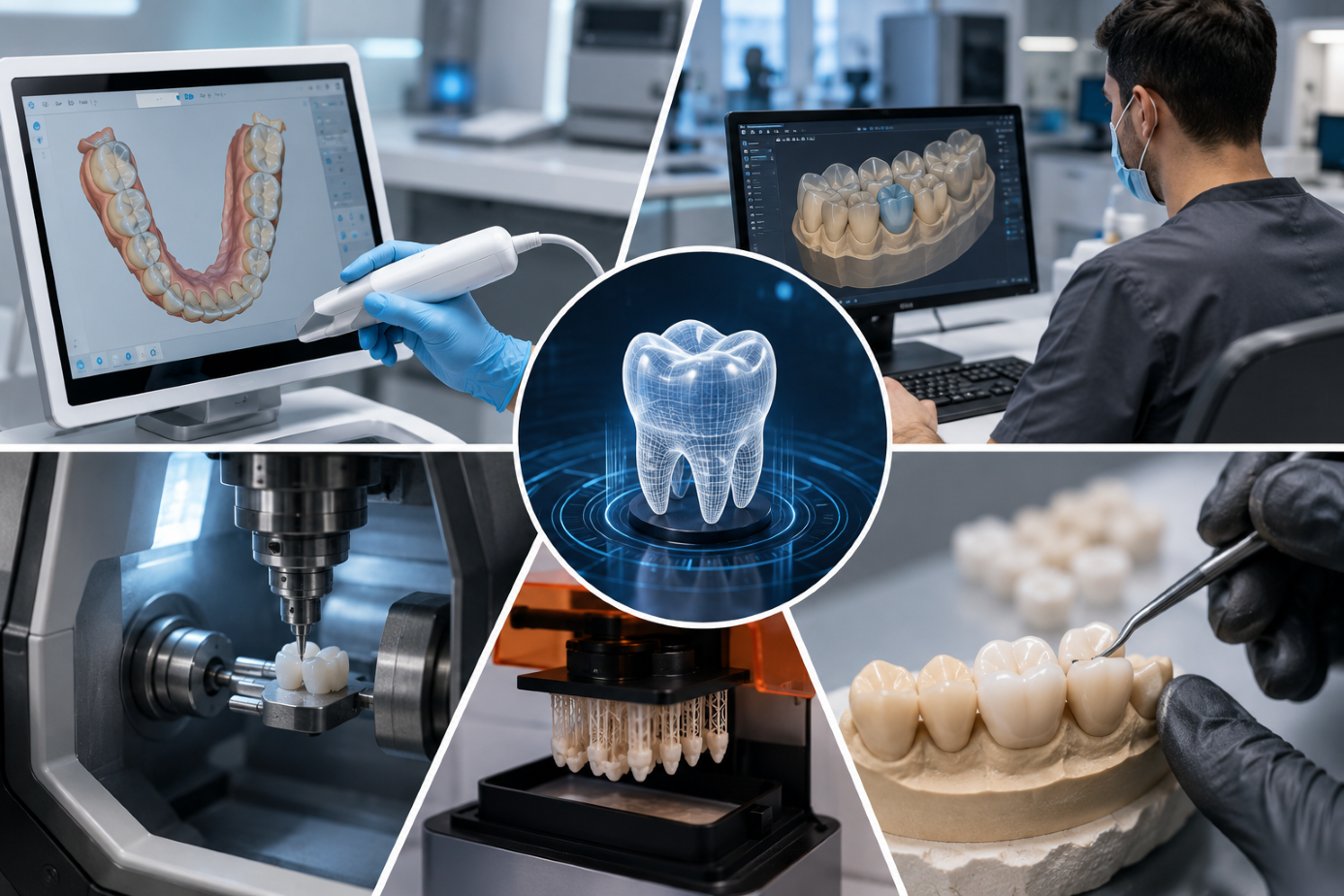
The dental industry has experienced a major technological evolution over the past decade. One of the most significant advancements is the rise of digital dentistry. Today, modern dental laboratories are using advanced digital tools and automated workflows to improve precision, efficiency, and patient satisfaction. From intraoral scanners to CAD/CAM systems and 3D printing technologies, digital dentistry is transforming the way dental restorations are designed and manufactured.
As patient expectations continue to grow, dental professionals and laboratories must adopt innovative solutions to remain competitive. Digital dentistry not only enhances production speed but also helps laboratories deliver highly accurate and aesthetically pleasing restorations.
What Is Digital Dentistry?
Digital dentistry refers to the use of digital technologies and computer-based systems in dental procedures and laboratory workflows. Instead of relying solely on traditional manual techniques, dental laboratories now use digital scanners, software, and automated manufacturing systems to create restorations with greater accuracy.
Modern dental laboratories use digital dentistry for:
- Digital impressions
- Crown and bridge fabrication
- Implant restorations
- Veneer production
- Orthodontic appliances
- Smile design solutions
The integration of digital dentistry has significantly reduced human error while improving consistency and quality control.
The Role of CAD/CAM Technology
One of the biggest innovations in digital dentistry is CAD/CAM technology. CAD stands for Computer-Aided Design, while CAM means Computer-Aided Manufacturing. These systems allow dental technicians to digitally design restorations and manufacture them with exceptional precision.
Benefits of CAD/CAM systems include:
- Faster production times
- Improved restoration accuracy
- Better marginal fit
- Enhanced patient comfort
- Reduced remakes and adjustments
With digital dentistry, dental laboratories can streamline workflows and provide restorations that meet modern clinical expectations.
How Intraoral Scanners Improve Accuracy
Traditional impression materials can sometimes create discomfort for patients and inaccuracies for dental laboratories. Intraoral scanners eliminate many of these issues by capturing highly detailed digital impressions.
Digital impressions improve communication between dentists and laboratories while also reducing turnaround times. As digital dentistry becomes more common, intraoral scanning technology continues to redefine restorative workflows.
Advantages include:
- Greater precision
- Faster case delivery
- Better patient experience
- Easier data storage and sharing
- Reduced material waste
The adoption of digital dentistry has made collaboration between clinics and laboratories more efficient than ever before.
3D Printing in Modern Dental Laboratories
3D printing technology is another revolutionary component of digital dentistry. Dental laboratories can now produce models, surgical guides, temporary restorations, and orthodontic appliances with incredible speed and accuracy.
Key benefits of 3D printing include:
- Cost-effective production
- Faster manufacturing
- High customization capabilities
- Consistent quality
- Reduced manual labor
As digital dentistry continues to evolve, 3D printing is expected to become even more important in laboratory production processes.
Improved Communication Between Clinics and Laboratories
Digital workflows allow dentists and laboratory technicians to communicate more effectively. Digital files can be shared instantly, enabling faster approvals, modifications, and case planning.
Modern communication tools in digital dentistry help reduce misunderstandings and improve treatment outcomes. Laboratories can receive highly detailed case information, including photographs, digital scans, and shade references.
This level of connectivity creates stronger partnerships between clinics and laboratories while increasing patient satisfaction.
Better Aesthetics and Patient Satisfaction
Patients today expect restorations that look natural and function perfectly. Digital systems allow technicians to create highly aesthetic restorations with precise shade matching and anatomical accuracy.
Through digital dentistry, laboratories can produce:
- Natural-looking crowns
- Highly aesthetic veneers
- Accurate implant restorations
- Customized prosthetics
The precision offered by digital workflows leads to fewer adjustments and better long-term results for patients.
The Future of Digital Dentistry
The future of digital dentistry is incredibly promising. Artificial intelligence, machine learning, and automation are expected to further improve laboratory workflows and restorative precision.
Future trends may include:
- AI-assisted restoration design
- Fully automated manufacturing systems
- Advanced facial scanning technology
- Cloud-based collaboration platforms
- Faster and more affordable 3D printing solutions
Dental laboratories that embrace digital dentistry today will be better prepared for the future of restorative dentistry.
Conclusion
Digital dentistry is transforming modern dental laboratories by improving efficiency, precision, communication, and patient satisfaction. Technologies such as CAD/CAM systems, intraoral scanners, and 3D printing are helping laboratories produce high-quality restorations faster than ever before.
As the dental industry continues to evolve, adopting digital dentistry is no longer optional for laboratories that want to remain competitive. Modern digital workflows not only enhance productivity but also provide better clinical outcomes and improved experiences for both dentists and patients.