New Jersey, USA


Introduction
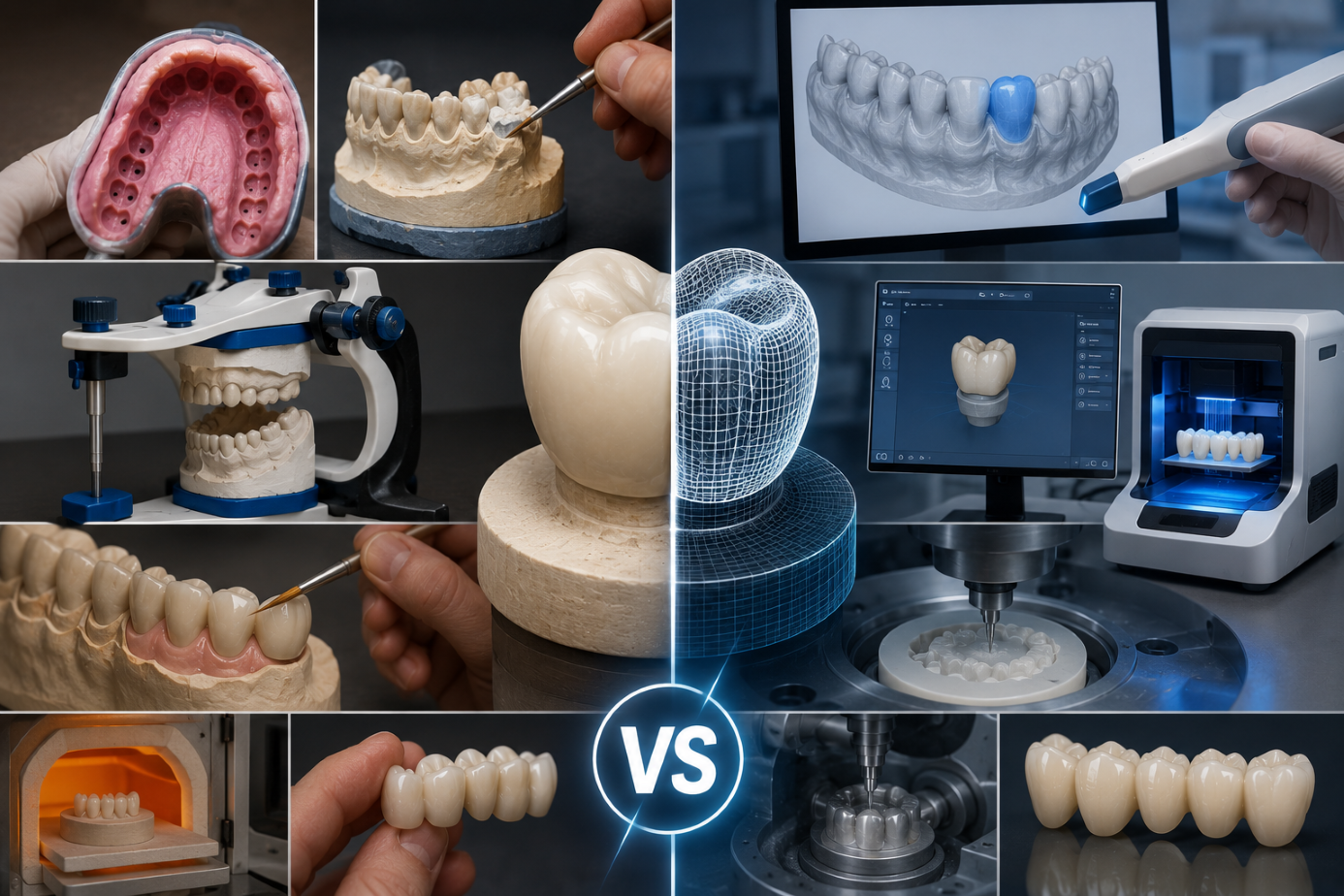
The dental industry has experienced a major transformation with the introduction of digital technologies. From intraoral scanners and CAD/CAM systems to 3D printing and digital case planning, digital workflows have changed how dental clinics and laboratories design, manufacture, and deliver restorations. While traditional methods have served dentistry successfully for decades, many professionals now question whether digital workflows offer superior results.
The answer depends on several factors, including accuracy, efficiency, communication, and clinical requirements. Understanding the strengths and limitations of both approaches helps clinicians and dental laboratories make informed decisions for each case.
This article compares digital workflows and traditional methods to determine which approach provides the greatest benefits for modern restorative dentistry.